Leather Sofa Repair: What You Can Fix at Home and When to Call a Pro
Short answer on leather sofa repair: dry, creased and faded leather usually comes back with a good clean and a few thin coats of conditioner. Small spots where the color has peeled, light scratches and fine cracks in the finish can be repaired with flexible filler, matched colorant and a clear top coat. Worn-through armrests, tears, and cracks across a whole cushion need a professional repair — and peeling bonded leather cannot be repaired at all.
Most leather sofas that reach a restoration workshop are not ruined. They are tired: armrests worn through by hands and elbows, a few spots where the finish has lifted, seat cushions that have dried out and creased. The photos in this article are real sofas, not studio shots, and they show the damage we see every week. Here is how to tell what you are looking at, what you can fix at home, and when leather sofa repair is a job for a professional.
First, check what kind of leather you have
The repair depends on the material more than on the damage. Most sofas are finished (pigmented) leather: a hide with a thin colored coating on top. Almost every repair on these sofas is really a repair of that coating. Aniline and semi-aniline leather have little or no coating, mark easily and are harder to repair invisibly. A drop of water on a hidden spot tells them apart — it beads on finished leather and soaks into aniline. Our guide on how to identify your leather has the full set of tests.
If thin flakes are coming off and fabric shows underneath, the sofa is bonded or faux leather. That is the plastic top layer separating from its backing, and no repair holds it for long.
Common damage and what actually fixes it
Dry, creased and faded leather
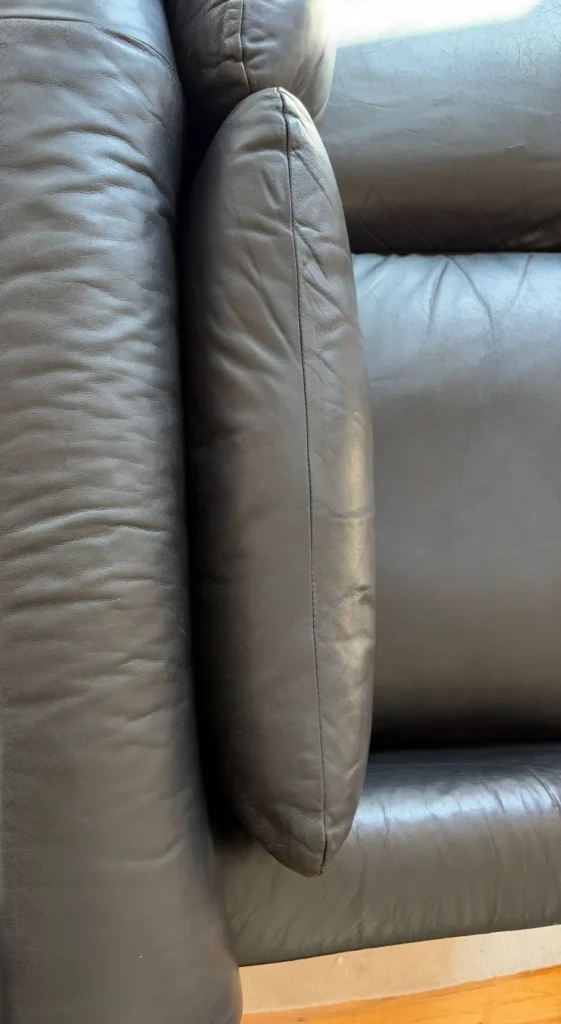
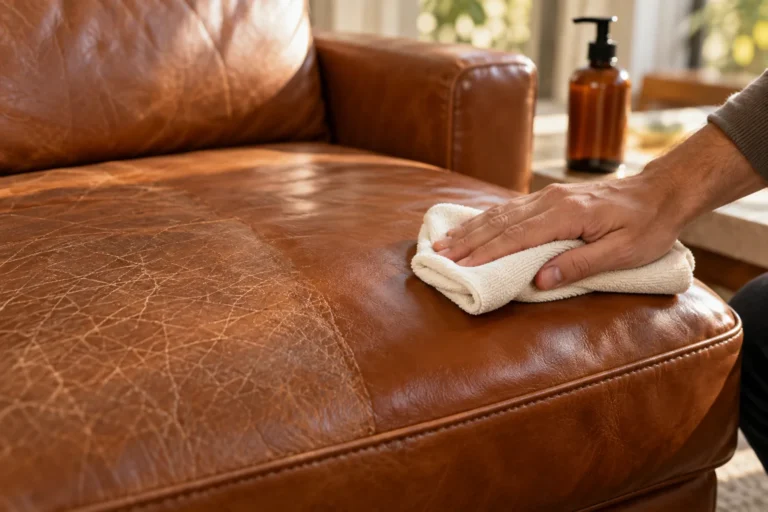
This is the most common condition and the easiest to improve. The leather has lost moisture, so it creases deeply where people sit and lean, looks dull and feels stiff. There is no break in the finish yet.
- Clean the whole sofa with a gentle leather cleaner to remove body oil and grime.
- Apply a thin layer of leather conditioner, let it absorb, and repeat over a few days until the leather feels supple again.
- Expect softer, less visible creases and a more even sheen. Deep creases in old leather will not disappear completely — they are part of how leather ages.
Small spots of peeling finish
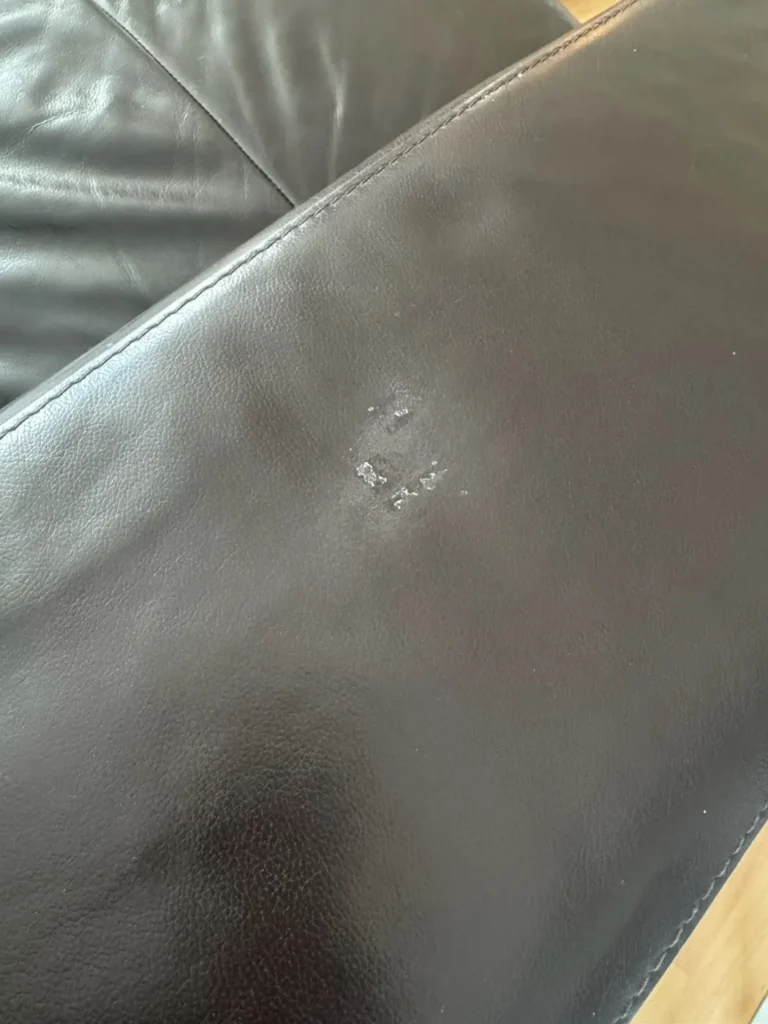
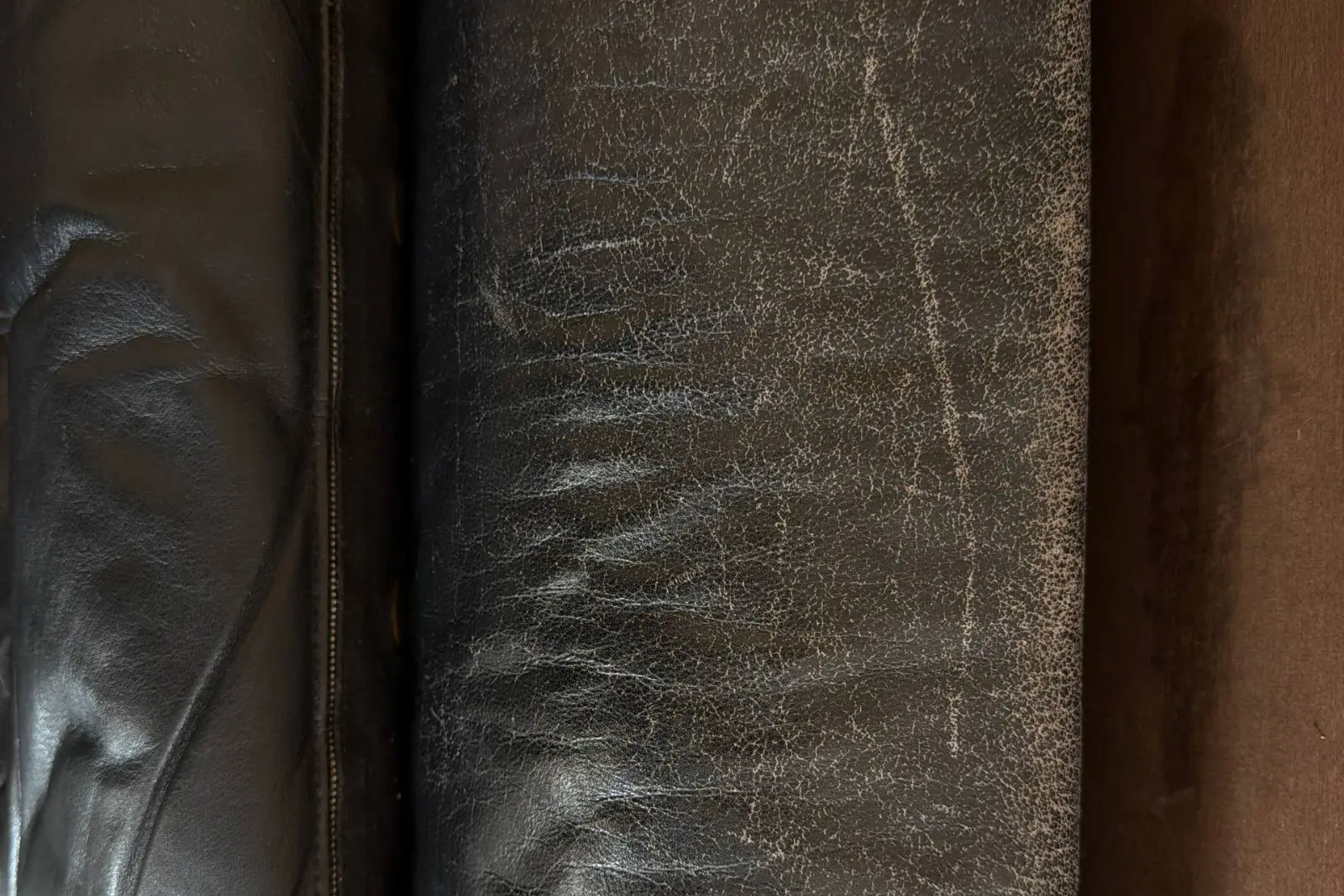
Small spots where the color has lifted and the lighter leather shows underneath usually appear on armrests and seat edges. On genuine finished leather, they are caused by body oil, sweat, hair products or harsh cleaners slowly breaking down the coating until it lets go.
A few small spots like these are a realistic home repair: clean and degrease the area, trim any loose flakes, fill level with flexible leather filler, then dab on matched colorant in thin coats and seal with a clear top coat. The difficult part is the color match, not the filling. Test the color on a hidden spot first and let it dry completely before you judge it.
Cracked, worn finish on armrests and seats
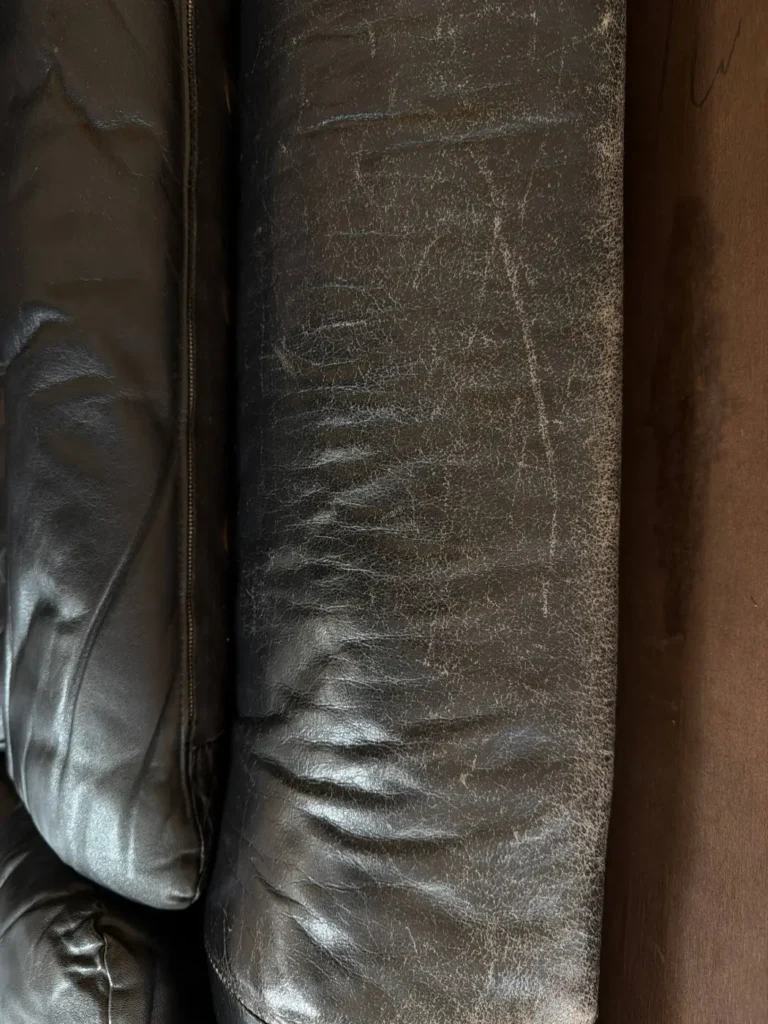
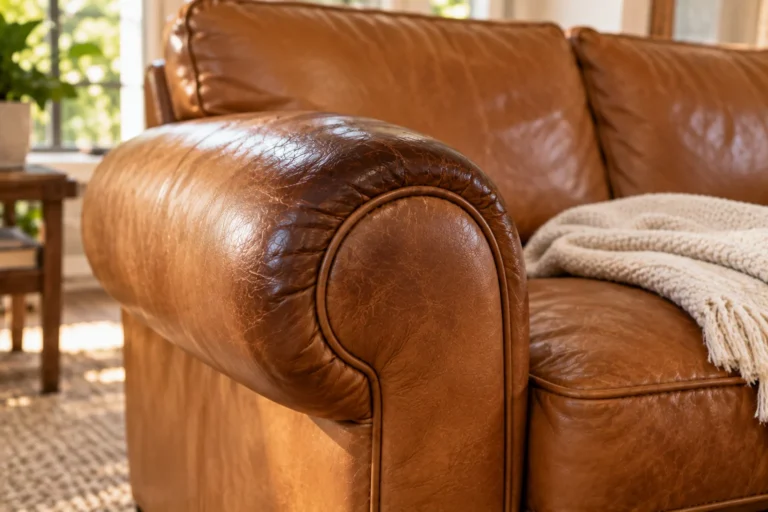
When the finish has cracked into a fine network of lines across a whole armrest or cushion, as in this photo, spot repairs no longer work. The panel has to be refinished: cleaned, degreased, lightly sanded, filled where needed, recolored from seam to seam and sealed. Conditioner alone will make the leather softer but will not close the cracks or bring back the color. The details are in how to fix a cracked leather couch.
Scratches, cuts and tears
- Light surface scratches on finished leather often fade with conditioner and gentle rubbing; scratches that break the color need filler and colorant like any finish damage.
- Small cuts and tears are repaired from behind with a sub-patch glued under the leather, then filled and recolored on top. Done well, they become hard to spot from a normal sitting distance.
- Large tears, splits along seams under tension and holes in the seat usually need a new panel or reupholstery.
Stains, dark armrests and dye transfer
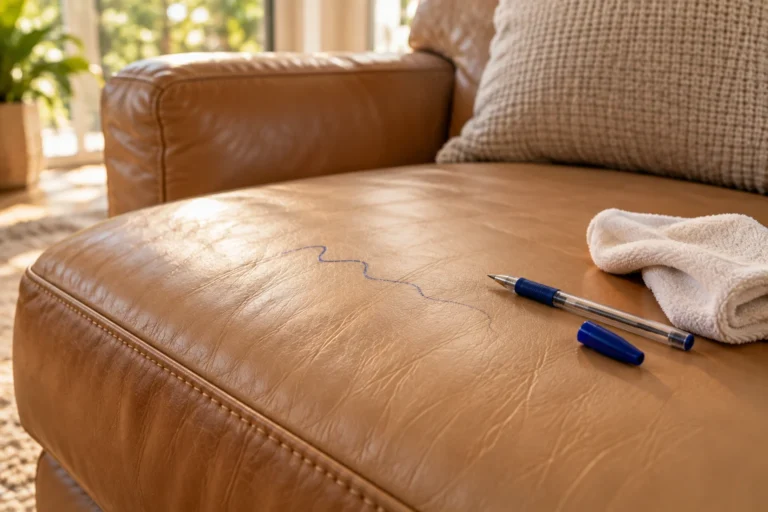
These are cleaning problems before they are repair problems. Start with the right method — ink, grease and body oil, or jeans dye on light leather — and only recolor if the mark stays after careful cleaning.
DIY or professional leather sofa repair?
Home repair makes sense for a few small, contained spots on finished leather, when you are comfortable with an imperfect color match and you can practice on a hidden area first. Kits can do a decent job there.
A professional is the better choice when the damage covers a whole armrest or cushion, when the sofa is aniline or semi-aniline, when the leather is light-colored or an unusual shade, or when the sofa is valuable enough that a visible patch would bother you. Refinishing a full panel so it matches the rest of the sofa in color and sheen takes equipment and practice that a home kit does not replace.
If you are in San Diego County, Leather Repair Center does leather couch and sofa repair in San Diego on site, in your home — cat scratches, small tears, cracked seats and worn armrests, headrest marks, dye transfer and sun-faded color. They give quotes from photos, which is the easiest way to find out whether your sofa needs a repair or just a good clean and conditioning.
How a professional repair is done
- Clean and degrease. Body oil and old products are removed, otherwise nothing bonds.
- Prepare the surface. Loose finish is removed and the area is lightly sanded so the repair blends in.
- Fill. Cracks, scratches and small holes are filled with flexible filler in thin layers; cuts and tears get a sub-patch first.
- Match and apply color. The colorant is mixed to the sofa and sprayed or sponged on in thin coats, usually over the whole panel rather than a single spot.
- Seal. A clear top coat in the original sheen protects the new color from wear and from rubbing off on clothes.
What a good repair looks like
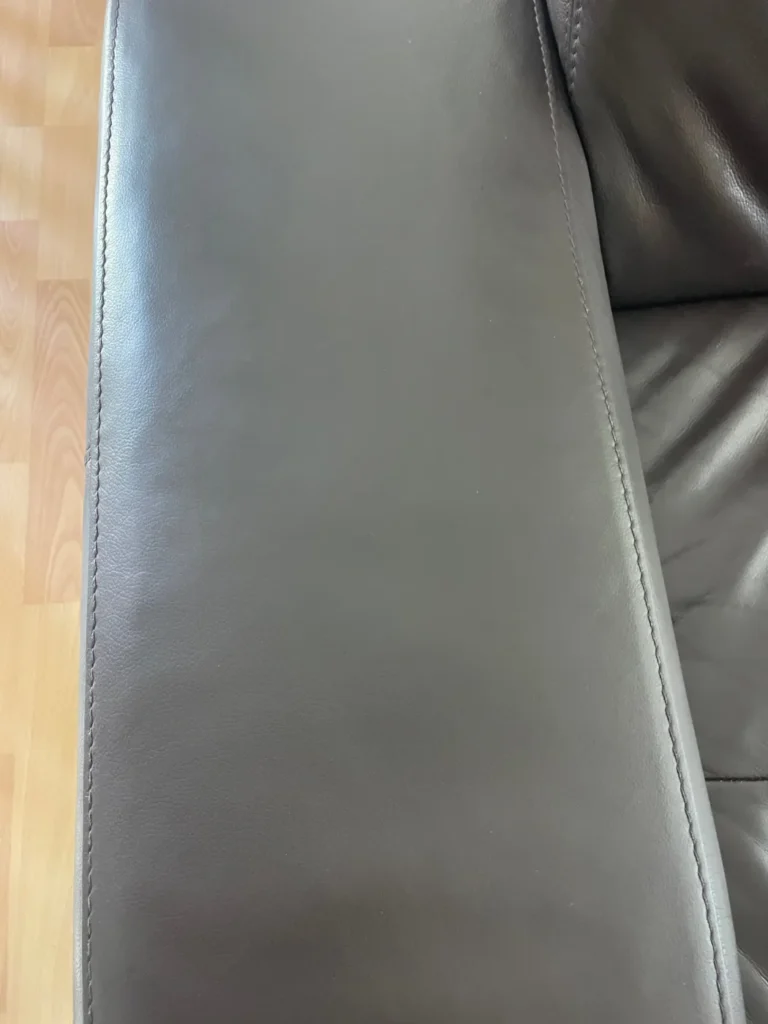
After a good repair you should see one even color across the panel, the leather grain still visible, no raised edges, no shiny patch where the repair is, and nothing coming off on a white cloth once it has cured. The leather should still flex without cracking. If you can feel a hard ridge or see a spot that is glossier than the rest, the repair was done too thick or with the wrong product.
When repair is not worth it
- Peeling bonded or faux leather. The surface layer is failing everywhere; patches peel again around the edges.
- Large tears or missing pieces on seat cushions that take full body weight — a new panel is more durable.
- Broken frames, springs or collapsed cushions. That is upholstery work, not leather repair.
- An inexpensive sofa with damage on every panel. The repair can cost more than the sofa is worth.
How to keep the damage from coming back
- Clean armrests, headrests and seat fronts regularly — body oil is what breaks the finish down.
- Condition lightly after each full cleaning.
- Keep the sofa away from direct sun, radiators and heating vents.
- Never use alcohol wipes, all-purpose sprays or magic erasers on leather.
The full schedule is in our leather couch care routine.
What we use in the workshop
After a repair, and to keep a sofa from reaching that point, we clean with a gentle foaming cleaner and follow with a thin layer of conditioning balm. Our Leather Care Kit puts both in one box, with the sponge and cloths to apply them.
Frequently asked questions
Can a peeling leather sofa be repaired?
If it is genuine finished leather and the finish has lifted in small spots, yes — with filler, colorant and a top coat. If thin flakes come off and fabric shows underneath, it is bonded or faux leather, and repairs rarely last.
Can worn leather armrests be restored?
Yes. Worn armrests on finished leather are one of the most common professional repairs: the armrest is cleaned, degreased, prepared, recolored and sealed so it matches the rest of the sofa.
Is it worth repairing a leather sofa?
For a good-quality genuine leather sofa with damage on a few areas, usually yes. For peeling bonded leather or a sofa with a broken frame, replacement often makes more sense.
Does leather conditioner repair cracks?
No. Conditioner softens dry leather and makes fine lines less visible, but it does not close cracks or replace missing color.
How long does a leather sofa repair last?
A properly prepared and sealed repair on finished leather should wear like the original finish. Keeping the area clean and conditioned helps it last.
Related: How to Fix a Cracked Leather Couch · Leather Couch Care: A Complete Routine · How to Identify Your Leather