How to Remove Oil Stains From a Leather Couch (Grease and Body Oil)
Short answer on how to remove oil stains from a leather couch: for a fresh grease spill on finished (pigmented) leather, blot it and clean the spot with a gentle leather cleaner. On aniline or semi-aniline leather, blot, then cover the spot with cornstarch to draw the oil out — no water, no scrubbing. For dark, shiny armrests and headrests caused by body oil, deep-clean the area in several gentle passes, then condition lightly.
In a restoration workshop we see two kinds of oil damage. The first is the accident: a slice of pizza, a drop of salad dressing, hand cream or a greasy takeout bag left on the seat. The second is slow: months of skin oils, hair products and sunscreen building up on armrests, headrests and seat edges until the leather turns darker, shiny and sometimes sticky. Both can be treated, but they need different approaches — and the type of leather matters more than the stain itself. Here is how to remove oil stains from a leather couch without making them bigger.
First, check your leather type
On finished (pigmented) leather, most oil sits on the protective coating for a while and can be cleaned off. On aniline and semi-aniline leather, oil soaks into the hide and shows up as a dark spot. A drop of water on a hidden area tells them apart: it beads on finished leather and soaks into aniline. Our guide on how to identify your leather has more detail.
What you need
- White microfiber cloths or paper towels
- A gentle, pH-balanced leather cleaner
- A soft brush — a clean soft toothbrush or an upholstery brush — for armrests and seams
- Cornstarch or unscented talc, for aniline leather
- A leather conditioner for afterwards
Fresh grease spills on finished leather
1. Blot, don’t wipe
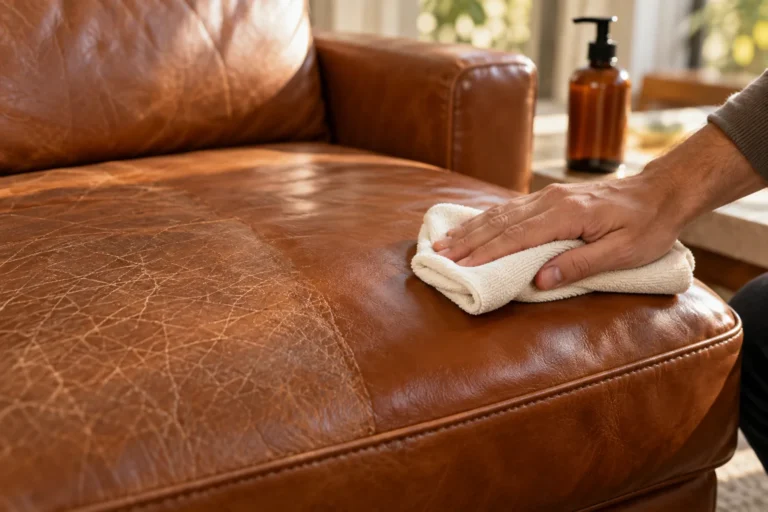
Lift as much oil as you can with a clean cloth: press, lift, move to a clean part of the cloth, repeat. Wiping pushes the grease into a wider patch.
2. Spot-test the cleaner
Try the cleaner on a hidden area of the same leather first — under a cushion or on the back of the sofa — and check that no color comes off onto the cloth.
3. Clean the spot, then the panel
Put a little cleaner on a cloth or sponge, work it over the spot in small circles and wipe with a clean, slightly damp cloth. Then clean outward to the nearest seam. Cleaning just the spot can leave a lighter “clean circle” that is more visible than the original stain.
4. Let it dry and check
Let the leather air-dry fully. A faint shadow often fades over a day or two; if it doesn’t, repeat once. Finish with a thin layer of conditioner over the whole panel.
Fresh oil on aniline or semi-aniline leather
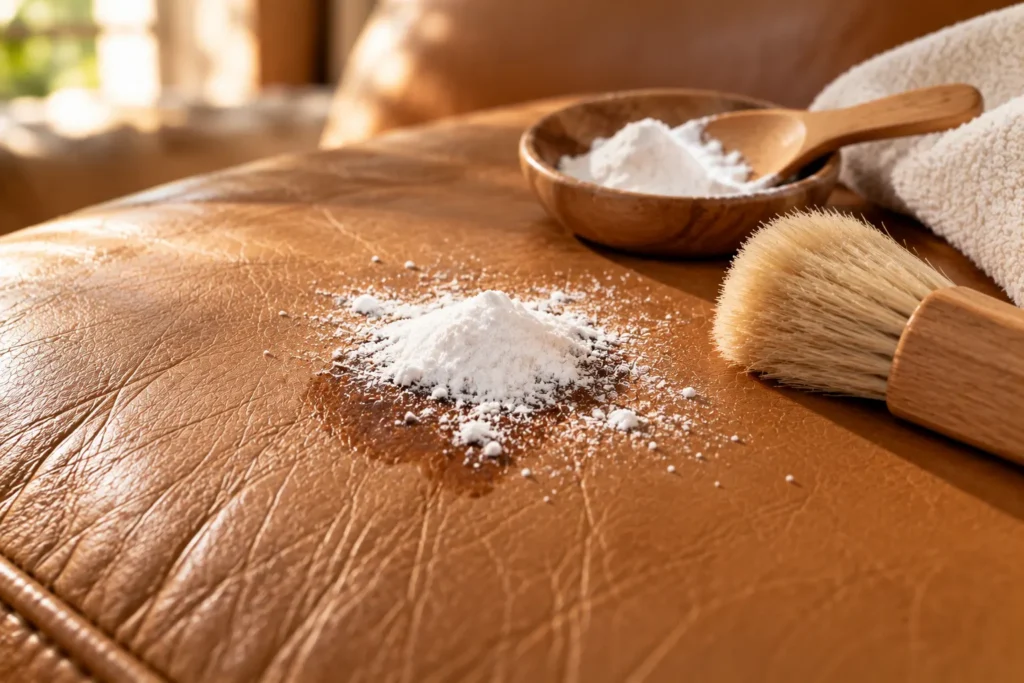
On unfinished leather the goal is to pull the oil out, not push it in. Water and cleaners spread oil through the fibers and tend to leave a ring.
- Blot immediately with a dry white cloth.
- Cover the spot with a generous layer of cornstarch or unscented talc.
- Leave it for several hours or overnight while the powder absorbs oil from the surface.
- Brush the powder off with a soft, dry brush. If the spot is lighter but still visible, repeat.
Small spots on aniline leather often become less noticeable over the following days as the oil spreads thinly into the surrounding leather. If a dark patch remains after a few rounds, a professional can treat it with a dedicated leather degreaser.
Dark armrests and headrests: body oil build-up
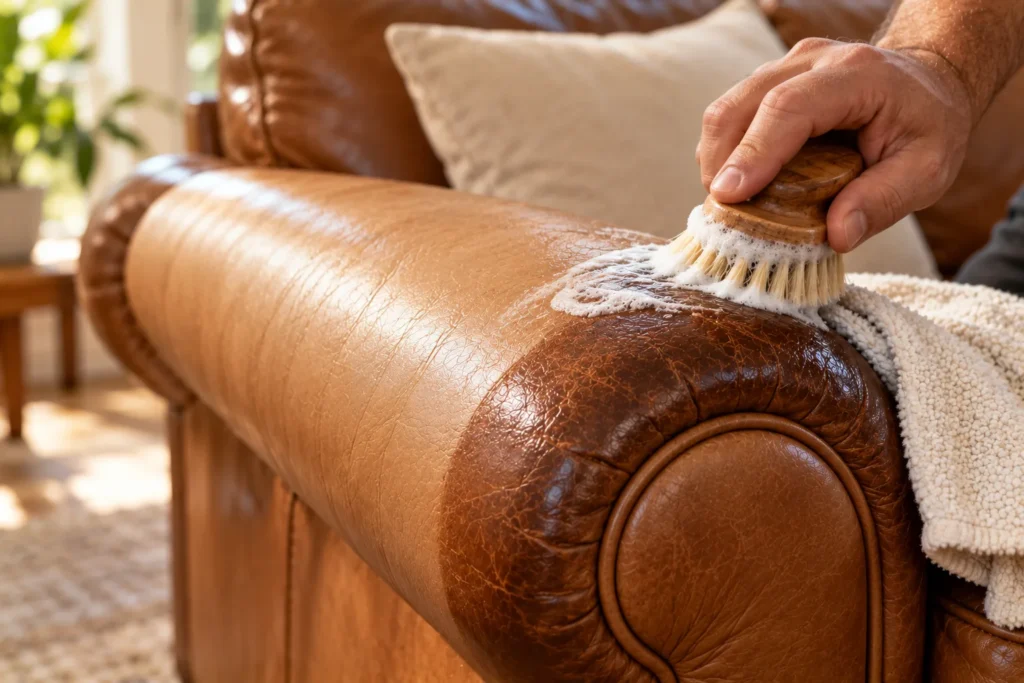
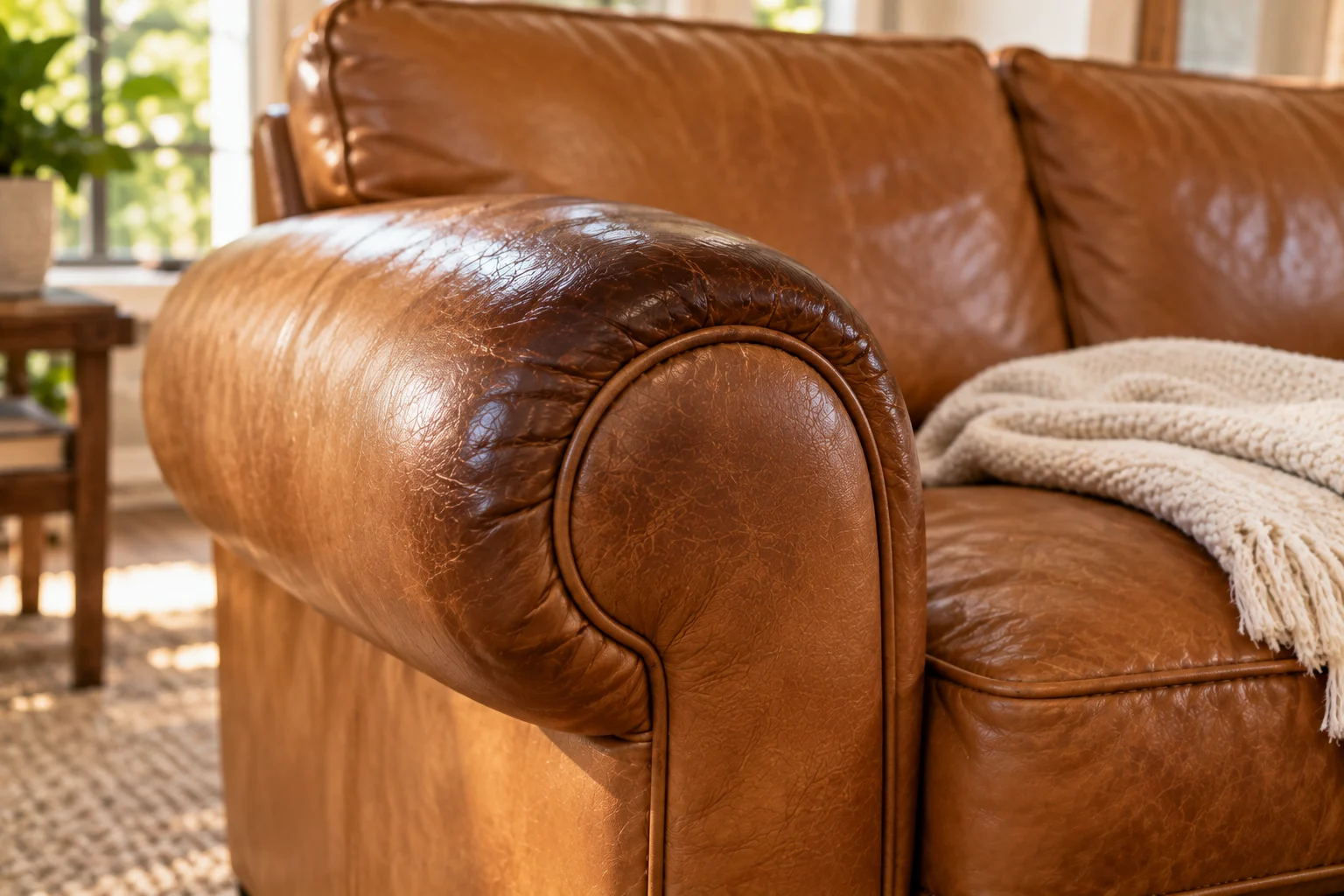
If the armrests or the top of the backrest are darker than the rest of the sofa, shiny and slightly tacky, you are looking at body oil build-up. It collects over months, so it comes off in stages rather than in one go.
1. Vacuum the seams
Use a soft brush attachment along the piping and seams, where dirt and oil collect first.
2. Clean with a soft brush
Apply cleaner foam to a soft brush or sponge and work it gently over the armrest in small, overlapping circles. The bristles reach into the grain, where most of the oil sits. No pressure is needed — let the cleaner do the work.
3. Wipe and repeat
Wipe with a clean, damp cloth and look at it: a grey or brown cloth means it’s working. Two or three passes are normal for a well-used armrest; if the leather gets noticeably wet, let it dry between passes.
4. Condition lightly
Finish with a thin layer of conditioner. More conditioner does not fix dark armrests — excess product holds dirt and adds to the build-up.
Expect a lighter, more even color rather than a brand-new look. If the finish under the oil has already cracked or peeled, cleaning won’t repair it; that needs a restorer.
How to keep armrests and headrests from darkening again
- Wipe armrests and headrests with a barely damp microfiber cloth every week or two.
- Clean the whole sofa with a leather cleaner every three months — and the most-used spots monthly.
- Use a throw or headrest cover if someone often sits there with damp hair, hair products or sunscreen.
- Condition lightly and not too often — see how often you should condition a leather sofa.
- Keep snacks on a tray and wipe greasy fingers before settling in. It sounds obvious, but it prevents most fresh stains.
What not to use
- Dish soap in large amounts. It cuts grease but is hard to rinse out of leather, and leftover soap attracts dirt.
- Kitchen degreasers and all-purpose sprays. Too harsh: they can strip the finish and dry the leather.
- Baking soda. It is alkaline and slightly gritty; cornstarch is a gentler absorbent.
- Vinegar. It doesn’t dissolve grease well and can dry leather out.
- Heat. A hair dryer can drive oil deeper and dry the leather around the spot.
- More conditioner. Adding an oily product to an oil stain only makes it bigger.
When to call a professional
- a large dark patch on aniline or semi-aniline leather
- armrests that stay dark or sticky after several careful cleanings
- finish that is cracking or peeling under the oil
- light-colored leather that has yellowed
- you are not sure what type of leather you have
A professional can degrease more deeply and, if needed, restore the color of worn areas so the armrest matches the rest of the sofa.
For regular upkeep once the stain is gone, see our leather couch cleaner page.
What we use in the workshop
For grease spills and body oil on finished leather we start with a gentle foaming cleaner and finish with a light conditioning balm. Our Leather Care Kit puts both in one box, with the sponge and cloths to apply them.
Frequently asked questions
Will an oil stain on leather go away on its own?
On aniline leather, small fresh spots often become less visible over a few days as the oil disperses. Larger spots and body oil build-up don’t disappear without cleaning.
Can I use cornstarch on finished leather?
Yes, it’s harmless, but usually not needed: on finished leather most oil wipes off with a leather cleaner.
Why are the armrests of my leather couch darker than the rest?
Skin oils, sweat, hand cream and hair products build up there together with dirt. Regular light cleaning keeps it from settling in.
Is dish soap safe for leather?
A drop in water now and then won’t ruin finished leather, but soap is hard to rinse out completely and residue attracts dirt. A pH-balanced leather cleaner is more predictable.
Related: How to Clean a Leather Couch Without Damaging It · Leather Cleaner vs Leather Conditioner · How to Get Ink Off a Leather Couch