How to Fix a Cracked Leather Couch (and When to Call a Pro)
Short answer on how to fix a cracked leather couch: fine surface lines on dry leather usually soften and fade after a careful clean and two or three thin coats of leather conditioner. Cracks that have broken through the colored finish need a flexible leather filler and matching colorant. Cracks that go through the hide itself, or peeling on bonded leather, cannot be fixed with care products — that is a job for a restorer or for new upholstery.
Cracked leather is the most common reason sofas arrive at a restoration workshop. Most owners have already tried something — olive oil, shoe polish, a thick layer of conditioner — and most of those attempts made the repair harder. The honest starting point is this: a conditioner can make dry leather supple again and make fine lines far less visible, but it cannot glue a crack back together. Below is how to fix a cracked leather couch at home when that is realistic, and how to tell when it is not.
First, work out what is actually cracked
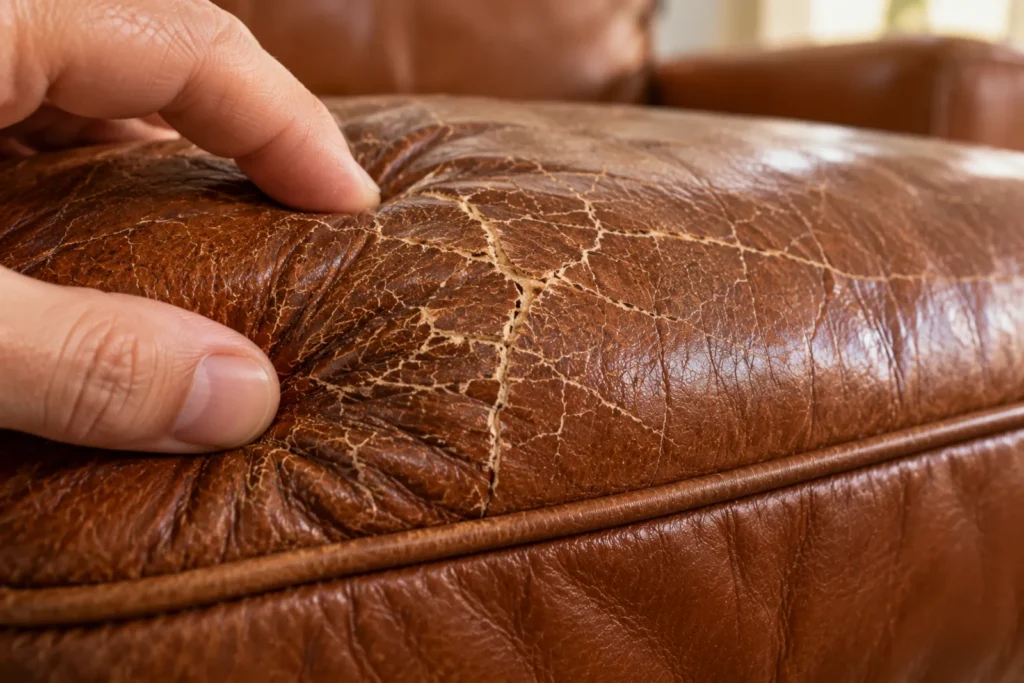
Look at the damaged area in daylight and gently stretch the leather between two fingers.
- Fine dry lines. A web of shallow creases on seat cushions, armrests or the top of the backrest. The color is intact and nothing catches a fingernail. This is dry, stiff leather, and it responds well to cleaning and conditioning.
- Cracked finish. The colored coating has split and you can see a lighter or greyish line inside each crack. The leather underneath is still whole. This is the classic problem on finished (pigmented) sofas and needs filler and colorant, not just conditioner.
- Cracks through the hide. The leather itself has split, feels rough or fibrous inside the crack and may be turning into a tear. Home products will not hold this together.
- Peeling flakes. If thin pieces of the surface lift off and reveal fabric underneath, the sofa is bonded or faux leather. It is the top layer coming away, not leather cracking, and it cannot be conditioned back.
Check your leather type
Finished (pigmented) leather has a protective coating, so cracks there are usually cracks in that coating. Aniline and semi-aniline leather have little or no coating, so they show dryness as stiffness, fading and fine lines instead. A drop of water on a hidden spot tells them apart: it beads on finished leather and soaks into aniline. Our guide on how to identify your leather explains the tests in detail.
Why leather cracks
- Dryness. Leather loses moisture and oils over time, faster next to radiators, fireplaces and air vents.
- Sun. Direct sunlight dries and fades the surface, usually on the top of the backrest and one armrest.
- Body oil and dirt. Skin oils and grime work into the finish on armrests and headrests and slowly break it down. That is why cracks start where people sit and lean.
- Harsh cleaners. All-purpose sprays, alcohol wipes and strong soaps strip the finish and speed everything up.
- Age and flexing. The seat front and cushion edges bend thousands of times; an old, dry finish eventually gives way there first.
What you need
- White microfiber cloths
- A gentle leather cleaner and a soft sponge or brush
- A leather conditioner
- For cracked finish only: a flexible leather filler, a small palette knife, fine sandpaper (600 grit or finer), leather colorant matched to your sofa and a clear leather top coat
How to fix fine cracks in dry leather
1. Clean the area first
Conditioner applied over dirt seals the dirt in. Work a small amount of cleaner into a foam on a sponge, clean the cracked area and the whole panel around it with light circular movements, and wipe the dirt away with a clean cloth. For the full method see how to clean a leather couch.
2. Let it dry
Give the leather an hour or two at room temperature. No hair dryer and no heater — heat is one of the things that caused the cracks.
3. Apply conditioner in thin layers
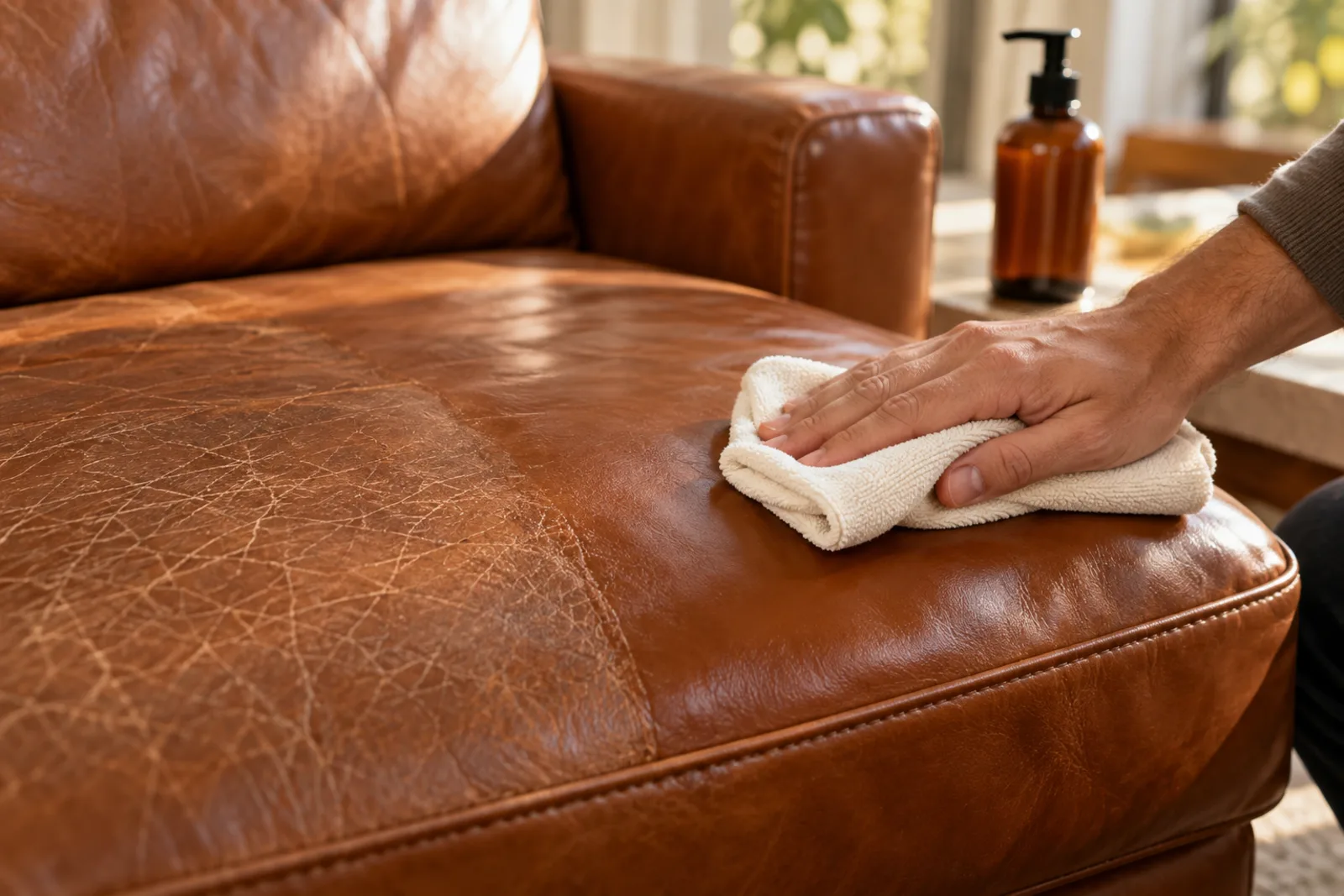
Put a small amount of conditioner on a cloth, not directly on the leather, and massage it in with gentle circular movements. Work it across the lines rather than along them. A thin, even layer is better than a thick one: leather only absorbs so much, and the rest stays on top and collects dust.
4. Wait and repeat
Leave it for several hours or overnight, then buff with a dry cloth. Very dry leather usually needs a second and sometimes a third thin coat over a few days. Stop when the leather feels supple and no longer drinks the product.
5. Judge the result honestly
Fine lines should look softer and less pale, and the leather should bend without a dry, papery feel. If you still see lighter lines where the color has split, you are dealing with cracked finish and the next section applies.
How to repair cracks in the finish
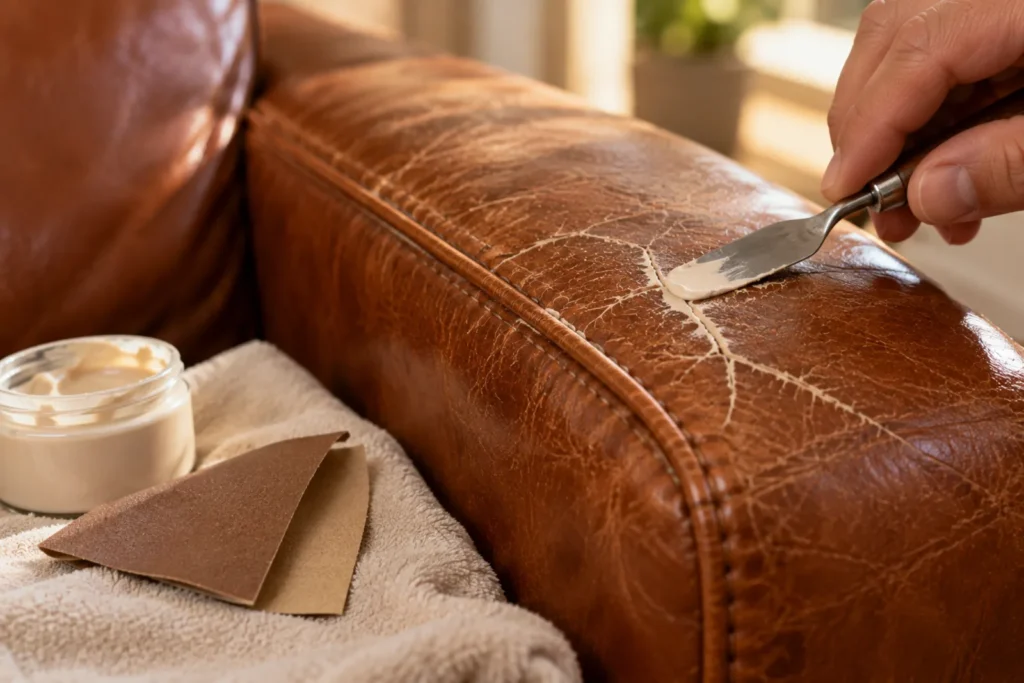
This repair is realistic for a small area — a few cracks on an armrest or a seat edge. It takes patience more than skill, but color matching is the hard part.
1. Clean and let dry completely
Clean as above, and do not condition before a repair: filler and colorant do not bond well to freshly conditioned leather.
2. Smooth the edges
Very lightly sand the cracked area with fine sandpaper, just enough to take down the raised, curled edges of the cracks. Wipe away the dust.
3. Fill in thin layers
Press a thin layer of flexible leather filler into the cracks with a palette knife and scrape off the excess so the filler stays only in the cracks. Let it dry fully and repeat. Two to four thin layers are stronger and flex better than one thick one. Sand lightly between layers if the surface feels uneven.
4. Restore the color
Dab matched leather colorant over the repair with a sponge in several thin coats, letting each one dry. Always test the color on a hidden spot first: a shade that looks right in the bottle often dries darker or lighter.
5. Seal it
Finish with a clear leather top coat in the same sheen as the rest of the sofa. Without it the color wears off quickly on a seat or armrest. Wait a couple of days before normal use, and only start conditioning that area again after the repair has fully cured.
What a conditioner can and cannot do
- It can soften dry, stiff leather, make fine surface lines far less visible and slow down further cracking.
- It cannot close a crack, rebuild missing finish, restore lost color or fix peeling bonded leather.
Any product or video that promises to erase deep cracks with a single wipe is showing a temporarily darkened, oily surface. The cracks are still there once it dries.
What not to use
- Olive oil, coconut oil or other kitchen oils. They darken the leather for a few days, then soak in unevenly, can turn rancid and leave sticky, dark patches that are hard to remove.
- Petroleum jelly. It sits on the surface, attracts dust and stops later repairs from bonding.
- Shoe polish. It is made for shoes, not upholstery, and it rubs off on clothes.
- Super glue. It dries hard and brittle, so the leather cracks again right next to it — and it ruins the surface for a proper repair.
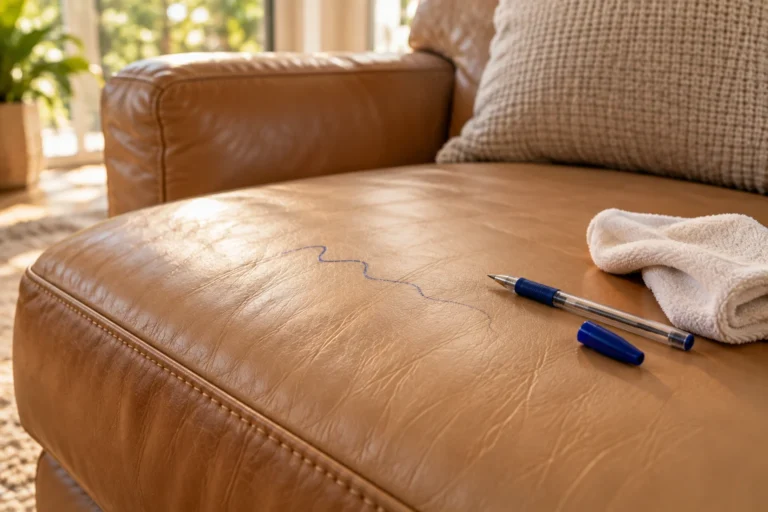
- Markers and furniture touch-up pens. The color rarely matches and it cannot be removed afterwards.
- Heat. A hair dryer or heat gun dries leather further and can shrink it.
- A thick layer of conditioner. More product does not mean more repair; it leaves a greasy film.
How to stop leather from cracking again
- Clean the sofa with a leather cleaner about every three months, and the armrests and headrests more often — body oil is what breaks the finish down. See how to remove oil stains from a leather couch.
- Condition regularly but lightly. Our guide on how often to condition a leather sofa gives a schedule by leather type and climate.
- Keep the sofa at least a couple of feet from radiators, fireplaces and heating vents.
- Keep it out of direct sun, or use blinds during the brightest hours.
- In very dry winters, a room humidifier helps leather as much as it helps wooden furniture.
- Never use all-purpose sprays, alcohol wipes or disinfecting wipes on leather.
When to call a professional
- cracks that go through the hide, or cracks that are turning into tears
- cracked finish across a large area — whole seat cushions or several panels
- color has worn away around the cracks
- aniline or semi-aniline leather with visible cracking
- a previous repair with oil, glue or polish that now needs to be removed
- an expensive or sentimental piece where a visible patch would bother you
A restorer can refinish a whole panel so the color and sheen match, or replace a single panel if the hide has failed. If the sofa turns out to be bonded leather and it is peeling, the honest answer is usually reupholstery or replacement.
For regular upkeep once the leather is in good shape again, see our leather couch cleaner page.
What we use in the workshop
Before any crack repair, and for the regular care that keeps cracks from starting, we clean with a gentle foaming cleaner and follow with a thin layer of conditioning balm. Our Leather Care Kit puts both in one box, with the sponge and cloths to apply them.
Frequently asked questions
Can cracked leather be repaired?
Fine surface lines usually improve a lot with cleaning and conditioning. Cracks in the colored finish can be repaired with flexible filler and matched colorant. Cracks through the hide itself need a professional.
Does leather conditioner fix cracks?
No. Conditioner softens dry leather and makes fine lines less visible, and it helps prevent new cracks. It does not close existing cracks or replace missing finish.
Can I use olive oil or coconut oil on a cracked leather couch?
It is not a good idea. Kitchen oils darken the leather for a short time, then soak in unevenly, attract dirt and can go rancid. They also make a later repair harder.
Why is my leather couch cracking on the seat and armrests?
Those areas flex the most and collect the most body oil and dirt, which break down the finish. Dry air, heat and sunlight speed it up.
Is it worth repairing a cracked leather sofa?
For a good-quality genuine leather sofa with cracks limited to a few areas, usually yes. For peeling bonded leather, repairs rarely last and replacement or reupholstery makes more sense.
Related: How to Clean a Leather Couch Without Damaging It · How Often Should You Condition a Leather Sofa? · Leather Cleaner vs Leather Conditioner