Mold on Leather Furniture: How to Remove It and Stop It Coming Back
Short answer on mold on leather furniture: take the piece somewhere well ventilated, vacuum the dry mold off with a soft brush, wipe finished leather with a cloth dampened with equal parts rubbing alcohol and water, let it dry completely, then clean and condition it. After that, fix the damp that caused it, or the mold will be back within weeks. Aniline leather, mold inside the cushions and large outbreaks are jobs for a professional.
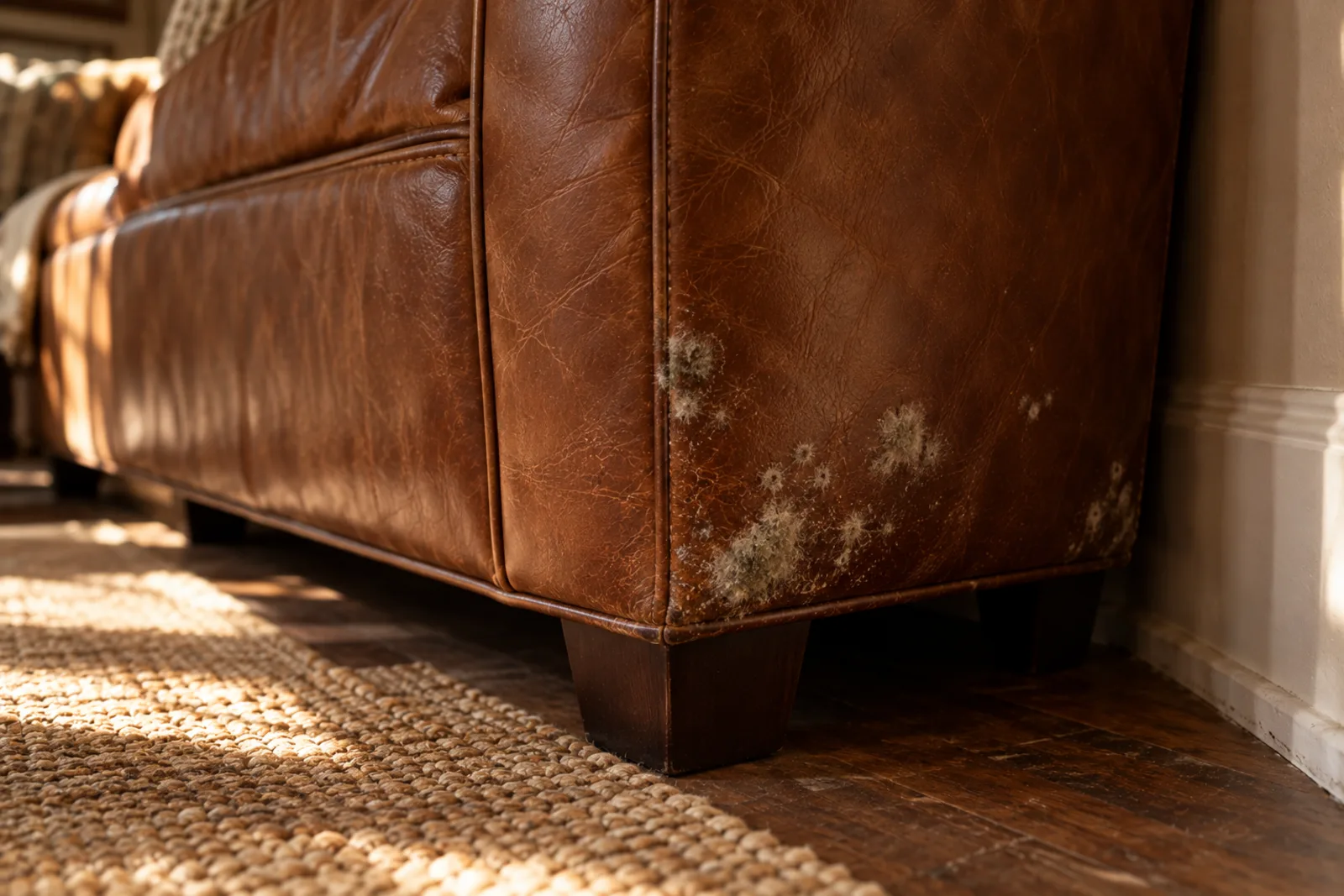
Mold on leather usually appears after a sofa has spent time in a basement, a storage unit, a closed-up holiday home or a room with a leak. It shows up as white, grey or greenish fuzzy spots, often with a musty smell, and it tends to start on the back and underside where air does not move. The good news is that on finished leather, surface mold comes off. The harder part is what you cannot see: spores in the seams and the padding, and the humidity that started it.
Is it mold, mildew or something else?
- Mold or mildew: fuzzy or powdery spots — white, grey, green or black — that smear when wiped and smell musty. Mildew is simply the common name for the flat, powdery kind.
- White haze that melts under a warm finger: on boots, bags and waxed leather this can be fats or waxes rising to the surface, not mold. It has no musty smell and wipes off cleanly with a dry cloth.
- Dust: grey, dry, no smell, and it does not come back in spots.
If it is fuzzy, spotty and smells of damp, treat it as mold.
Safety first
Mold spores irritate the lungs, and brushing a moldy sofa sends them into the air.
- Wear gloves and a well-fitting mask, and open the windows. If the piece can be moved, work outdoors or in a garage.
- If you have asthma, allergies or a weakened immune system, ask someone else to do it or call a professional.
- Keep children and pets out of the room while you work.
- Wash the cloths hot afterwards or throw them away, and empty the vacuum outside.
Check your leather type
Finished (pigmented) leather has a protective coating, so mold mostly sits on the surface. Aniline and semi-aniline leather are absorbent: mold grows into them and the treatment itself can leave marks. A drop of water on a hidden spot tells them apart — it beads on finished leather and soaks into aniline. More in how to identify your leather.
What you need
- A vacuum with a soft brush attachment, ideally with a HEPA filter
- Disposable gloves and a mask
- Several white microfiber cloths
- Rubbing alcohol (isopropyl, 70%) and water
- A gentle leather cleaner and a soft sponge
- A leather conditioner
How to remove mold from finished leather
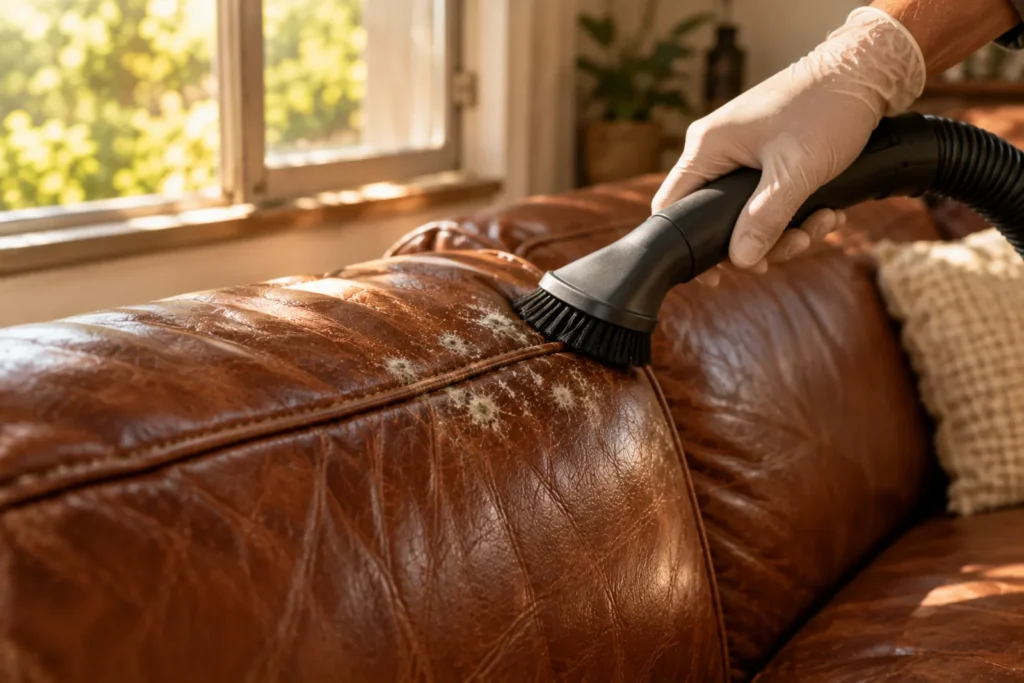
1. Let the surface dry
If the sofa is damp, move it to a dry, airy place first. Wet mold smears into the grain; dry mold lifts off.
2. Vacuum the mold off
Use the soft brush and light strokes. Go over the whole piece, not only the visible spots: seams, piping, the back, the underside and under the cushions.
3. Wipe with diluted alcohol
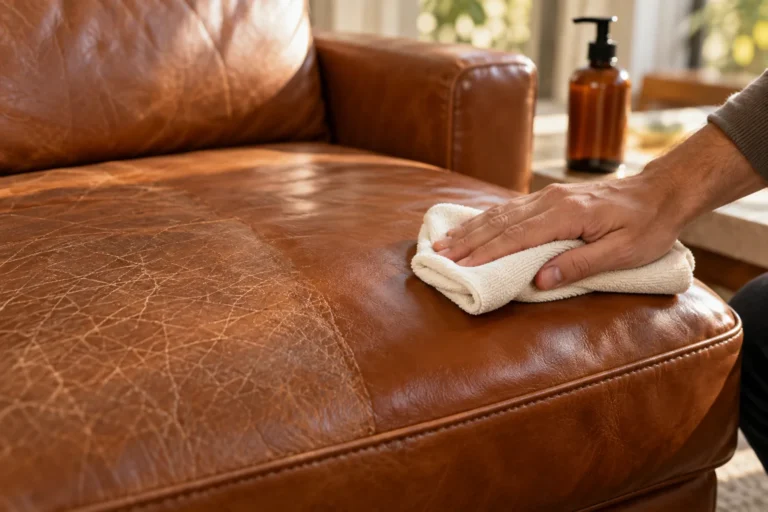
Mix equal parts rubbing alcohol and water. Test it on a hidden spot and wait until it dries: if the color or the sheen changes, stop. Otherwise dampen a cloth with the mix — damp, not wet — and wipe the affected areas and a wide margin around them. Change cloths often so you are not spreading spores.
Alcohol is normally something we tell people to keep away from leather, because it can strip the finish. This is the exception: a light wipe with a diluted mix, once, to kill what the vacuum left behind. Do not scrub and do not repeat it week after week.
4. Let it dry completely
Leave the piece in moving air for several hours. Indirect daylight helps; direct hot sun and heaters do not.
5. Clean the leather
Work leather cleaner into a foam on a sponge and clean each panel, wiping the foam away with a clean cloth. This removes the residue and the dirt that mold feeds on. The full method is in how to clean a leather couch.
6. Condition lightly
Alcohol and mold both dry leather out. Once the sofa is fully dry, apply a thin layer of conditioner and buff it.
7. Check again after a week
Look and smell. If spots return in the same places, the mold is inside the padding or the room is still too damp.
Mold on aniline and semi-aniline leather
Vacuum the dry mold off carefully and move the piece to a dry, airy room. Do not use the alcohol mix without testing: on absorbent leather it can leave pale or dark marks, and mold often stains the leather itself. If spots or a smell remain after vacuuming and airing, take it to a restorer.
What not to use
- Bleach. It damages leather and its finish and discolors it.
- Undiluted vinegar. Often recommended, but it dries leather and leaves a smell of its own; it is no gentler than the diluted alcohol wipe.
- Lots of water or a steam cleaner. Moisture is what the mold needs.
- A stiff brush. It scratches the finish and drives spores into the grain.
- Air fresheners. They hide the smell while the mold keeps growing.
- Conditioner on top of mold. Clean first. Conditioning a moldy surface feeds it.
How to get rid of the musty smell
A musty smell after cleaning means mold is still somewhere. Air the sofa for a few days with the cushions removed and stood on edge. Put an open box of baking soda or a bag of activated charcoal under and behind the sofa — near the leather, not on it — and replace it after a few days. If the smell stays in the cushions, the foam or the lining is affected and may need replacing.
How to stop mold coming back
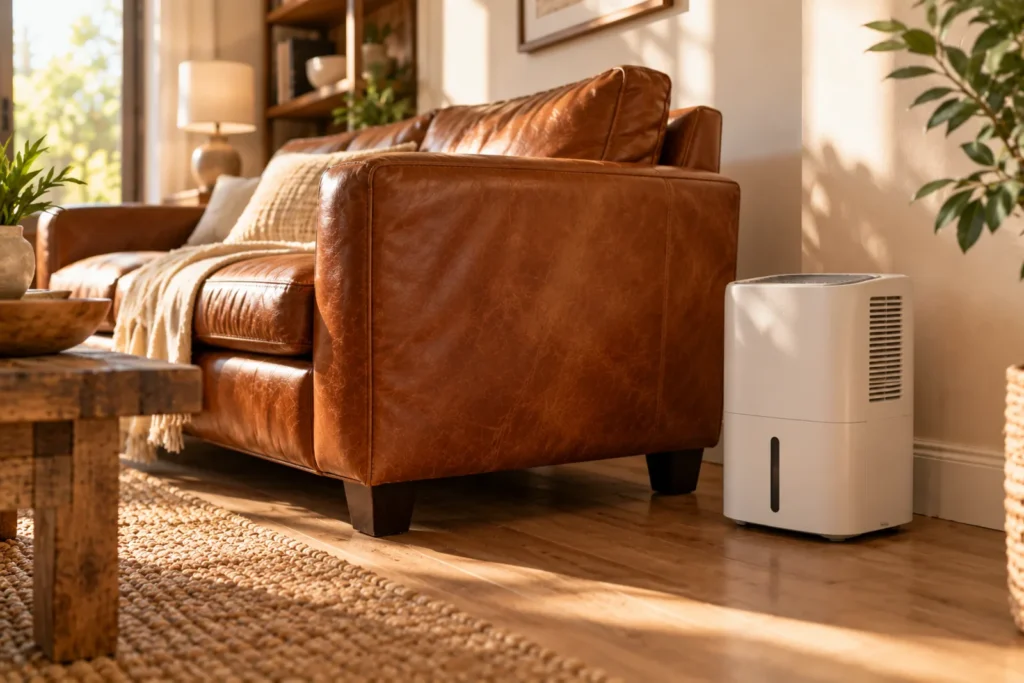
- Keep indoor humidity below about 60% — a dehumidifier in basements and closed rooms makes the biggest difference.
- Leave a gap between the sofa and outside walls so air can move.
- Do not store leather furniture under plastic sheeting; use breathable cotton covers.
- Fix leaks and condensation before the furniture goes back.
- Clean and condition the sofa regularly — see our leather couch care routine. Dirt and body oil are food for mold.
- For leather jackets, bags and boots kept in closets, the same rules apply: dry before storing, breathable covers and some air.
When to call a professional
- mold covering large areas or returning after cleaning
- mold on aniline, semi-aniline or light-colored leather that has left stains
- a musty smell coming from inside the cushions or the frame
- furniture that has been in a flood
- anyone in the home with asthma, allergies or a weakened immune system
A restorer can treat the leather, replace affected padding and recolor stained areas. After flooding, be prepared to hear that the piece is not worth saving.
For regular care once the mold is gone, see our leather couch cleaner page.
What we use in the workshop
After the mold has been removed and the leather is dry, we clean it with a gentle foaming cleaner and finish with a thin layer of conditioning balm. Our Leather Care Kit puts both in one box, with the sponge and cloths to apply them.
Frequently asked questions
What kills mold on leather?
On finished leather, a light wipe with equal parts rubbing alcohol and water after vacuuming kills surface mold. Always test on a hidden spot first, and follow with cleaning and conditioning.
Can a moldy leather couch be saved?
Usually yes, if the mold is on the surface of finished leather. Mold inside the cushions, on aniline leather or after flooding is much harder and needs a professional.
Does vinegar kill mold on leather?
It can act on surface mold, but it dries leather and leaves its own smell. We prefer diluted rubbing alcohol used once and lightly.
Why does mold grow on leather furniture?
Leather is a natural material and holds dirt and oils that mold feeds on. Add humidity above roughly 60% and still air, and spores start growing.
Will mold on leather come back?
It will if the room stays damp or if spores remain in the seams and the padding. Lowering humidity and improving air flow matter as much as the cleaning.
Related: How to Clean a Leather Couch Without Damaging It · Leather Couch Care: A Complete Routine · How Often Should You Condition a Leather Sofa?