Leather Couch Care: A Complete Routine From a Restoration Workshop
Short answer on leather couch care: dust it weekly, wipe the armrests and headrests every week or two, clean the whole sofa with a leather cleaner about every three months, and condition it lightly after cleaning. Keep it out of direct sun and away from heat, and deal with spills the same day. That routine takes a few minutes a week and prevents most of the damage we repair.
Almost every sofa that comes into a restoration workshop has the same story. Nothing dramatic happened to it. It was simply left alone for a few years, then cleaned hard with whatever was under the sink. Leather does not need much, but it needs it regularly: dirt and body oil removed before they break down the finish, and moisture put back before the leather dries out. This is the leather couch care routine we give our own customers after a restoration.
Start with your leather type
The routine is the same for every sofa, but how gentle you need to be depends on the leather.
- Finished (pigmented) leather has a protective colored coating. A drop of water beads on it. It is the most common and the most forgiving.
- Semi-aniline leather has a thin coating. Water darkens it slowly. Use less moisture and test products first.
- Aniline leather has almost no coating. Water soaks in at once. It marks easily, so it needs the lightest touch and the most regular care.
If you are not sure which one you have, our guide on how to identify your leather takes five minutes. Suede and nubuck need different products and are not covered here.
What you need
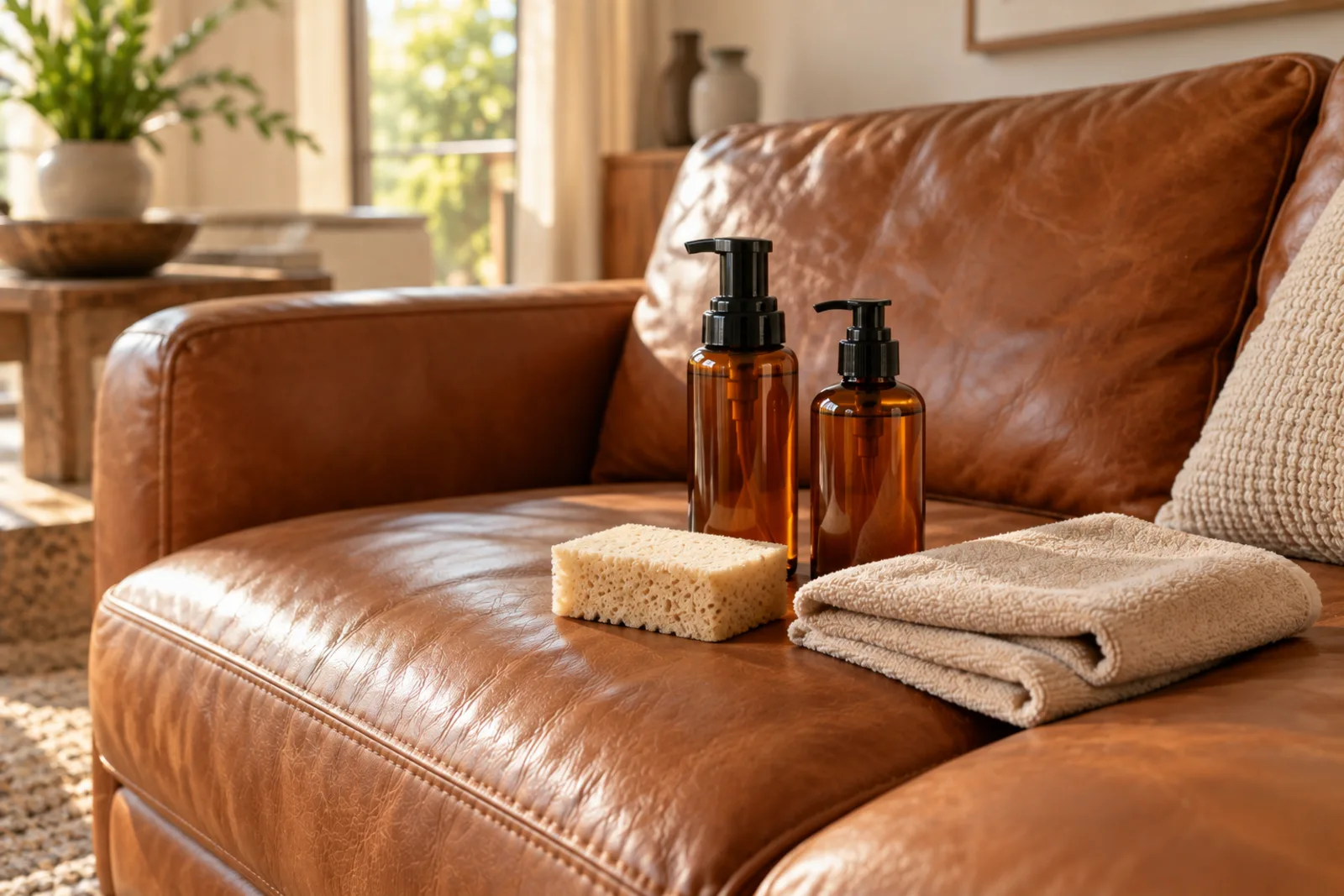
- A vacuum with a soft brush attachment
- A few white microfiber cloths
- A soft sponge
- A gentle leather cleaner
- A leather conditioner
Why two products instead of one is explained in leather cleaner vs leather conditioner.
Weekly: dust and crumbs
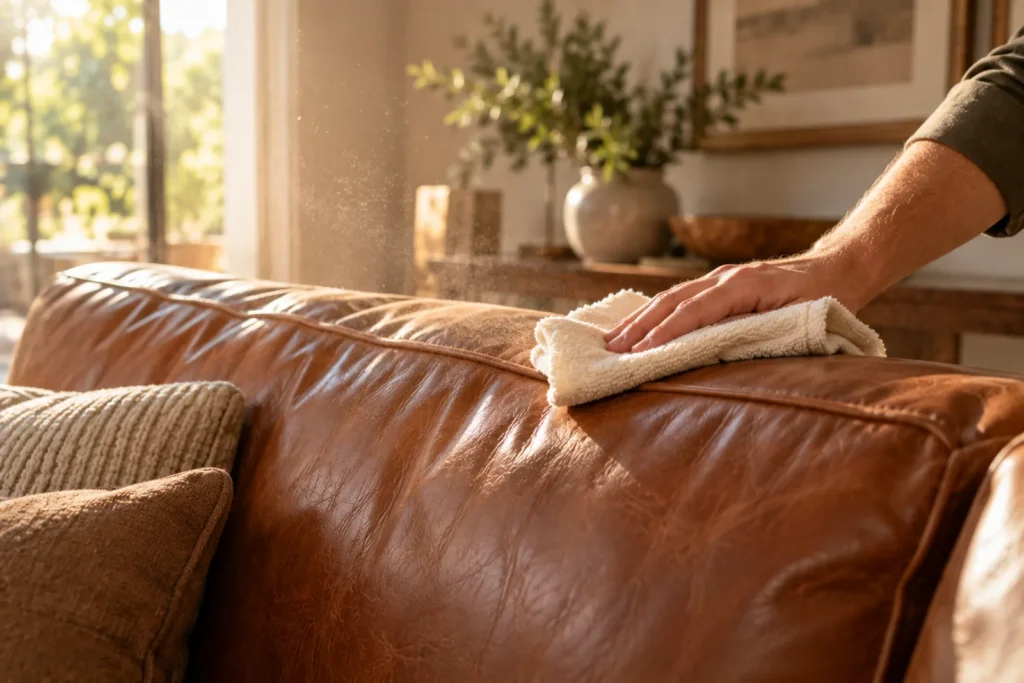
- Vacuum the seat, the seams and the gaps between cushions with the soft brush. Crumbs and grit grind into the finish every time someone sits down.
- Wipe the whole sofa with a dry microfiber cloth.
- Plump and rotate loose cushions so the same one does not take all the wear.
This takes about five minutes and does more for the life of the finish than any product.
Every week or two: armrests and headrests
Skin oils, hair products and sunscreen collect where hands and heads rest. Left for months, they darken the leather and soften the finish until it cracks or peels.
- Wipe armrests, headrests and seat fronts with a barely damp microfiber cloth, then dry them.
- If they already look darker or shiny, clean just those areas with leather cleaner once a month. The method for built-up oil is in how to remove oil stains from a leather couch.
Every three months: clean and condition
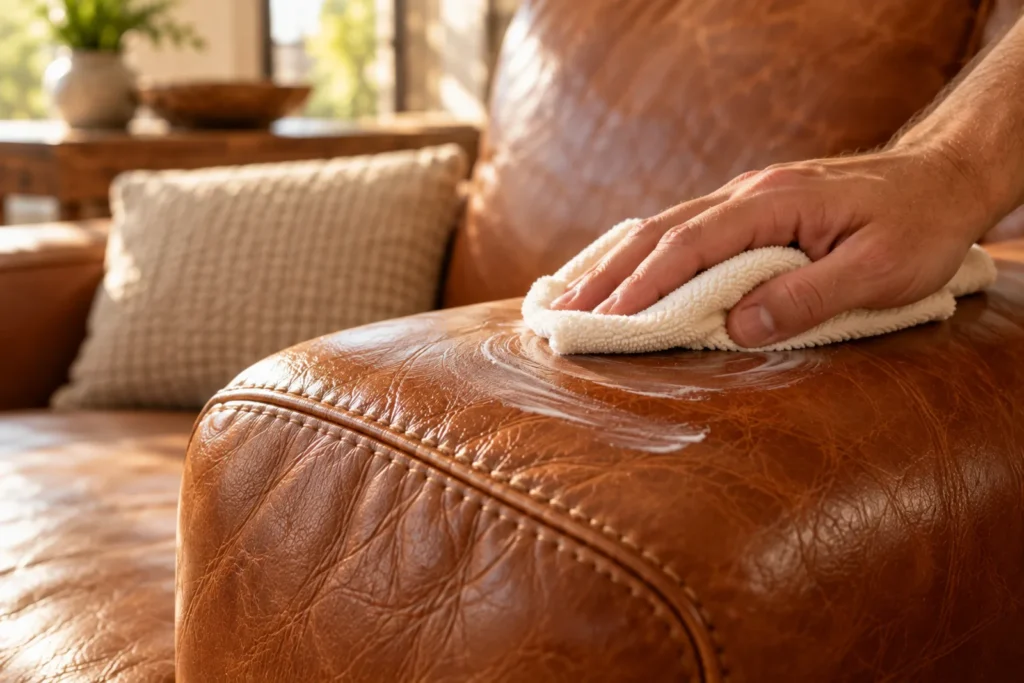
This is the main part of leather couch care. Plan about an hour for a three-seater.
1. Vacuum
As in the weekly routine, but thoroughly, including under the cushions.
2. Clean panel by panel
Work the cleaner into a foam on a sponge, clean one panel at a time with light circular movements and wipe the dirt away with a clean cloth before the foam dries. The full method, with what to do in seams and creases, is in how to clean a leather couch.
3. Let it dry
An hour or two at room temperature. No hair dryer and no heater.
4. Condition lightly
Apply a thin layer of conditioner with a clean cloth, leave it to absorb, then buff with a dry cloth. Thin is the important word: leather only takes in so much, and the excess stays on top and holds dust.
How often to repeat this depends on the leather, the climate and how much the sofa is used. Light-colored leather, homes with children or pets, and dry or hot climates need it more often. Our guide on how often to condition a leather sofa has a schedule by situation.
Once a year: a full check
- Look at the sofa in daylight for fading, dry areas, fine cracks and worn color on seat edges.
- Check the seams and the piping for loose threads.
- Clean and condition the parts nobody sees: the back, the sides and under the cushions.
- If the sofa stands in the sun, consider rotating it or swapping the cushions so one side does not fade.
Catching dryness and wear early is the difference between a simple conditioning and a repair.
Where the sofa stands matters
- Sun. Direct sunlight fades and dries leather, aniline fastest. Use blinds or move the sofa out of the brightest spot.
- Heat. Keep at least a couple of feet between the sofa and radiators, fireplaces and heating vents.
- Dry air. In winter with the heating on, leather dries out faster. A humidifier helps.
- Damp. Leather stored in a damp room can develop mold. Air needs to move around it.
What to do with spills
- Blot at once with a dry white cloth or paper towel. Do not rub.
- On finished leather, wipe the area with a barely damp cloth and dry it.
- On aniline leather, just blot and let it dry; rubbing or adding water spreads the mark.
- For ink, see how to get ink off a leather couch. For grease, use the oil stains guide above.
What to avoid
- All-purpose sprays, window cleaner and disinfecting wipes. They strip the finish.
- Baby wipes, vinegar and dish soap as a routine. They leave residue or dry the leather out — see can you use baby wipes on a leather couch.
- Melamine sponges. They sand the finish off.
- Olive oil, coconut oil and other kitchen oils. They darken the leather, turn sticky and can go rancid.
- Too much water. Leather should be cleaned with foam and a damp cloth, never soaked.
- Too much conditioner. A thick layer leaves a greasy film; it does not protect better.
- Steam cleaners and hair dryers. Heat and moisture together damage both the leather and the finish.
Leather couch care with pets and children
- Keep a throw on the seat your pet prefers and wash it often.
- Trim claws; scratches are the most common pet damage on leather.
- Wipe food and drink marks the same day.
- Clean the most-used seats monthly rather than every three months.
- Keep pens, markers and slime away from the sofa. Ink is the stain we are asked about most.
The routine at a glance
- Weekly: vacuum, dry wipe.
- Every one to two weeks: damp wipe of armrests and headrests.
- Every three months: full clean and light conditioning.
- Yearly: inspection, hidden areas, cushion rotation.
- Any time: blot spills at once.
When to call a professional
- cracks in the finish or the leather — see how to fix a cracked leather couch
- color worn away on seat edges or armrests
- fading or yellowing
- stains that have soaked into aniline leather
- armrests that stay dark or sticky after several careful cleanings
- tears, loose seams and sagging panels
Good care slows wear down. It does not reverse it. When the color or the finish is gone, a restorer can recolor and reseal the leather, and the routine above keeps that repair looking good.
For product-based care, see our leather couch cleaner page.
What we use in the workshop
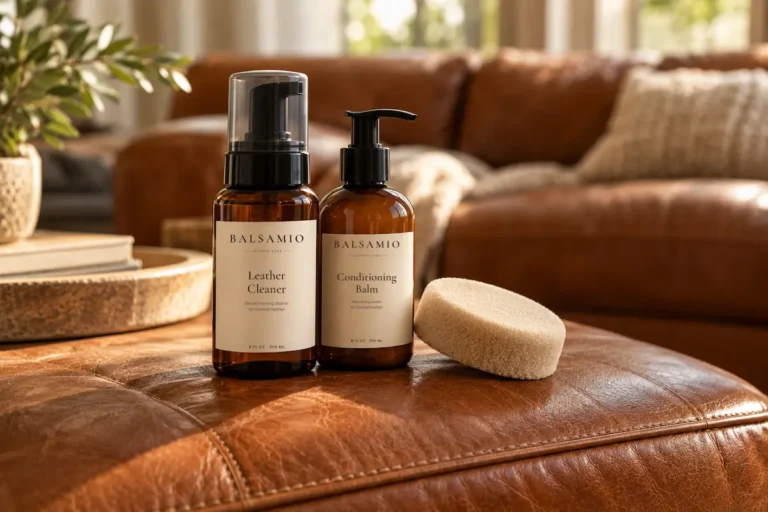
The routine above is the one we follow in the workshop: a gentle foaming cleaner first, then a thin layer of conditioning balm. Our Leather Care Kit puts both in one box, with the sponge and cloths to apply them.
Frequently asked questions
How do you take care of a leather couch?
Dust and vacuum it weekly, wipe armrests and headrests every week or two, clean it with a leather cleaner about every three months and condition lightly after cleaning. Keep it out of direct sun and away from heat.
How often should a leather couch be cleaned?
A full clean about every three months suits most homes. Light-colored leather and sofas used by children or pets benefit from monthly cleaning of the most-used areas.
Does a leather couch need to be conditioned?
Yes. Leather slowly loses moisture and becomes stiff and prone to cracking. A thin layer of conditioner after cleaning keeps it supple.
What should you not put on a leather couch?
Avoid all-purpose sprays, disinfecting wipes, bleach, melamine sponges, kitchen oils and anything abrasive. They strip or damage the finish.
How long does a leather couch last?
A good-quality leather sofa that is cleaned and conditioned regularly can stay in use for decades. Most early failures come from dryness, body oil build-up and harsh cleaners.
Related: How to Clean a Leather Couch Without Damaging It · How Often Should You Condition a Leather Sofa? · How to Identify Your Leather