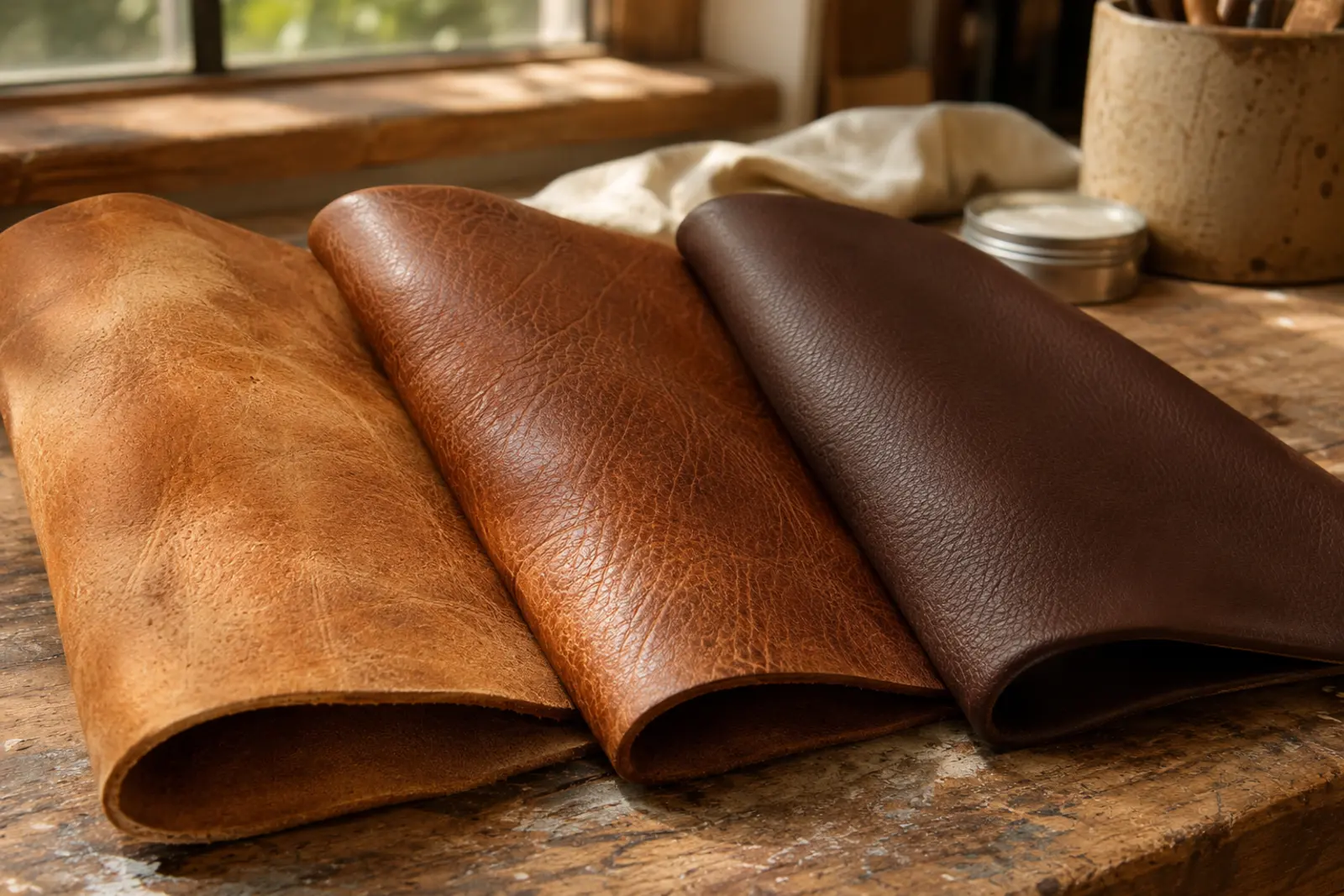
Aniline vs Semi-Aniline vs Pigmented Leather: Differences and Care
Short answer on aniline vs semi-aniline vs pigmented leather: aniline leather is dyed all the way through with no protective coating, so it feels the softest and shows every mark. Semi-aniline has a thin protective layer with a little pigment — still soft, but more forgiving. Pigmented (also called protected or finished) leather has a colored coating on top that makes it the most durable and the easiest to clean. Most leather sofas in American homes are pigmented.
The type of leather decides almost everything about a sofa: how it feels, how it ages, which stains come out, which cleaners are safe and how a repair is done. Yet most owners do not know which one they have — the label usually just says “genuine leather” or “top grain”. This guide explains how the three types differ and what each one needs. If you want to test your own sofa right now, our guide on how to identify your leather walks through the water drop, scratch and fold tests step by step.
Aniline leather
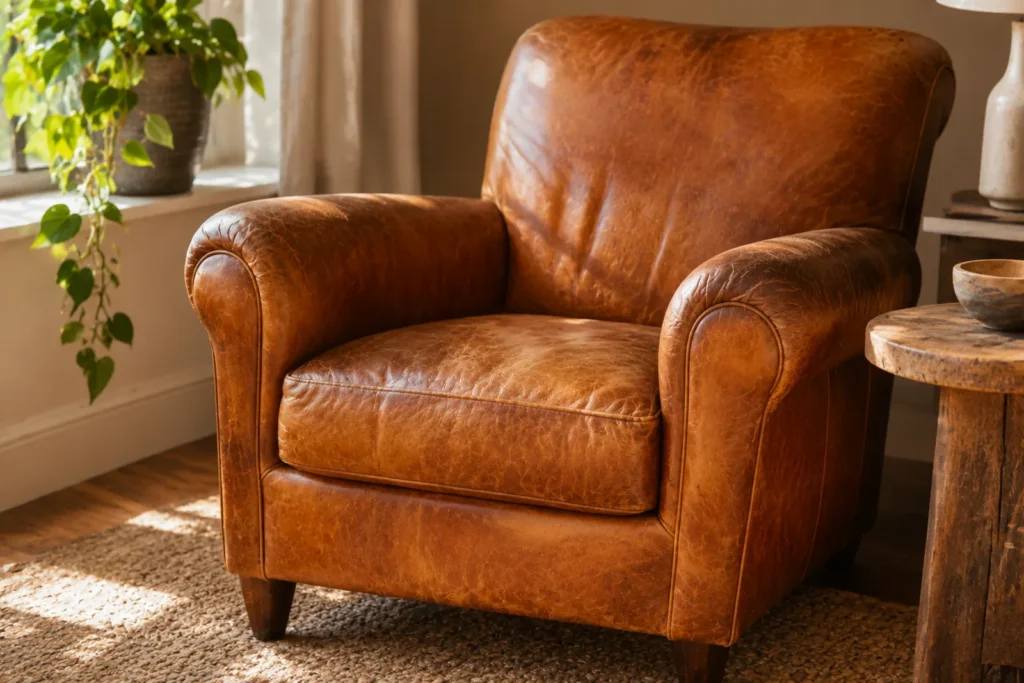
Aniline leather is dyed in a drum with soluble dyes that soak through the whole hide. Nothing sits on top: no pigment layer, no sealing coat, or only a very light one. Only the best hides are used this way, because every scar, vein and insect bite stays visible.
- Look: natural grain and pores, slight color variation from one area to another, a warm, deep color.
- Feel: very soft, slightly warm to the touch, sometimes almost velvety.
- Behavior: water soaks in and darkens it for a while; scratches show; it fades in sunlight and darkens where hands and heads rest. Over years it develops a patina that many owners love.
- Where you find it: high-end sofas and armchairs, luxury handbags, some jackets.
Semi-aniline leather
Semi-aniline starts the same way as aniline, then gets a thin surface coat containing a small amount of pigment. The coat evens out the color a little and adds some resistance to stains and light, while the grain stays visible.
- Look: natural grain, more even color than aniline.
- Feel: soft, close to aniline.
- Behavior: water beads briefly and then slowly darkens the leather; small spills can be wiped up if you are quick; fades more slowly than aniline.
- Where you find it: mid- to high-end furniture, car seats in premium vehicles, many handbags.
Pigmented (protected) leather
Pigmented leather has an opaque colored coating on the surface, usually followed by a clear top coat. That coating is what you see and touch. It hides natural marks, keeps the color even and stops most liquids from soaking in.
- Look: uniform color, often an embossed grain pattern, the same sheen everywhere.
- Feel: smooth, a little cooler and firmer than aniline.
- Behavior: water beads and can be wiped off; most everyday stains clean up; it resists fading. Its weak point is the coating itself: body oil, harsh cleaners and age can make it crack or peel on armrests and seat edges.
- Where you find it: the majority of leather sofas and recliners, most car seats, many family-oriented furniture lines.
Aniline vs semi-aniline vs pigmented at a glance
- Softest: aniline, then semi-aniline, then pigmented.
- Most stain-resistant: pigmented, then semi-aniline, then aniline.
- Fades in sun: aniline the most, pigmented the least.
- Easiest to clean at home: pigmented.
- Best with kids and pets: pigmented, or semi-aniline if you accept some marks.
- Develops patina: aniline the most; pigmented barely changes until the coating wears.
- Easiest to repair invisibly: pigmented, because the color sits on the surface and can be rebuilt.
How to tell which one you have
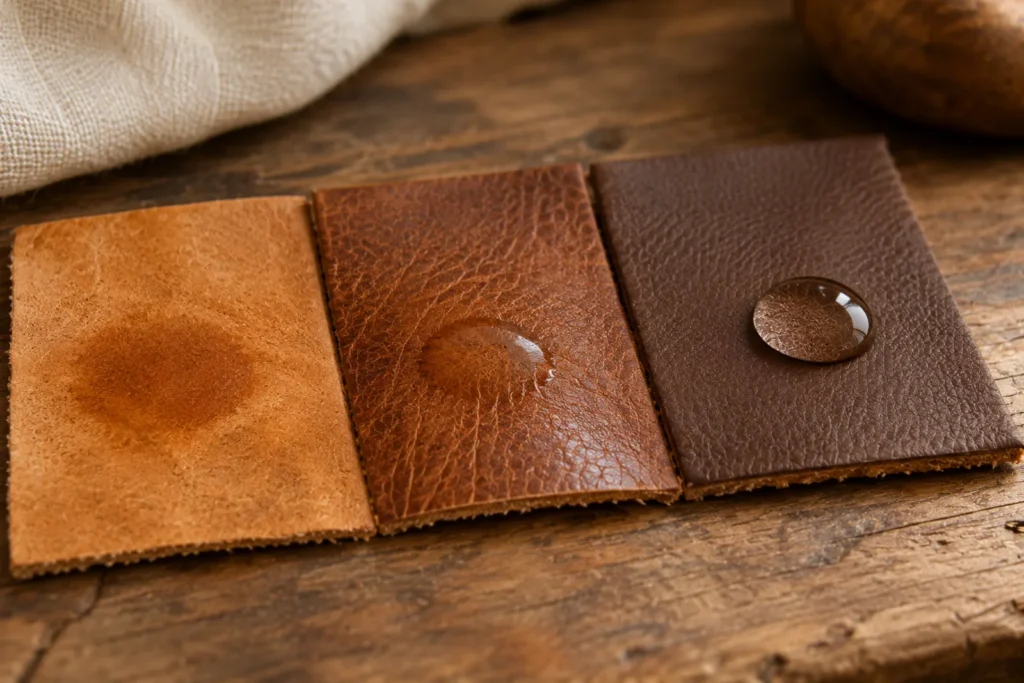
The quickest home test is a single drop of water on a hidden spot, such as the back of the sofa near the floor:
- Soaks in within seconds and darkens the leather — aniline.
- Beads for a few seconds, then slowly sinks in — semi-aniline.
- Stays on the surface as a bead — pigmented.
A light fingernail scratch on a hidden spot gives a second clue: on aniline it leaves a lighter mark that often rubs back out; on pigmented leather it does little or nothing. Full instructions, and how to read the results, are in how to identify your leather.
How to care for each type
Aniline
- Dust with a dry microfiber cloth; avoid water and wet wipes.
- Blot spills immediately and let them dry naturally — rubbing spreads the mark.
- Use only products that say they are safe for aniline leather, and always test first; many conditioners darken it.
- Keep it out of direct sun.
Semi-aniline
- Wipe with a barely damp cloth; clean with a gentle leather cleaner worked into a foam rather than wet liquid.
- Condition lightly with a leather conditioner after testing on a hidden spot.
Pigmented
- Clean regularly — about every three months, and armrests and headrests more often. Body oil is what breaks the coating down.
- Condition lightly after cleaning to keep the leather under the coating supple.
- Avoid alcohol, all-purpose sprays and magic erasers, which strip the coating.
The full schedule is in our leather couch care routine.
Which type should you buy?
- Busy family, pets, light colors: pigmented leather. It forgives spills and is the easiest to keep looking new.
- Adults-only home, want softness: semi-aniline is a good middle ground.
- You love natural character and patina: aniline, knowing it will mark and change over time — that is the point of it.
Whatever you choose, ask the store which type it is and keep the care label. It saves guesswork when the first spill happens.
Common myths
- “Top grain” means aniline. No. Top grain describes which layer of the hide is used, not the finish. Top-grain leather can be aniline, semi-aniline or pigmented.
- Pigmented leather is fake. No. It is real leather with a protective coating. Bonded and faux leather are different materials — see how to identify your leather.
- Aniline leather cannot be cleaned. It can, but gently, with very little moisture and products tested on a hidden area first.
What we use in the workshop
On pigmented and semi-aniline furniture we clean with a gentle foaming cleaner and finish with a thin layer of conditioning balm, after a test on a hidden spot. Our Leather Care Kit puts both in one box, with the sponge and cloths to apply them.
Frequently asked questions
What is the difference between aniline and semi-aniline leather?
Aniline leather is dyed through with no protective coating, so it is the softest but marks easily. Semi-aniline has a thin protective coat with a little pigment, which makes it more resistant to stains and fading while keeping a natural look.
Is pigmented leather real leather?
Yes. Pigmented leather is real hide with a colored protective coating on the surface. It is the most common type on sofas because it is durable and easy to clean.
Which leather is best for a sofa with kids and pets?
Pigmented leather. It resists spills and stains and is the easiest to clean and repair.
Does aniline leather stain easily?
Yes. Without a coating, liquids and oils soak in quickly. Blot spills at once and use only products made for aniline leather.
Can you condition pigmented leather?
Yes, lightly, after cleaning. The coating limits how much soaks in, so a thin layer is enough.
Related: How to Identify Your Leather · Leather Couch Care: A Complete Routine · Leather Cleaner vs Leather Conditioner
