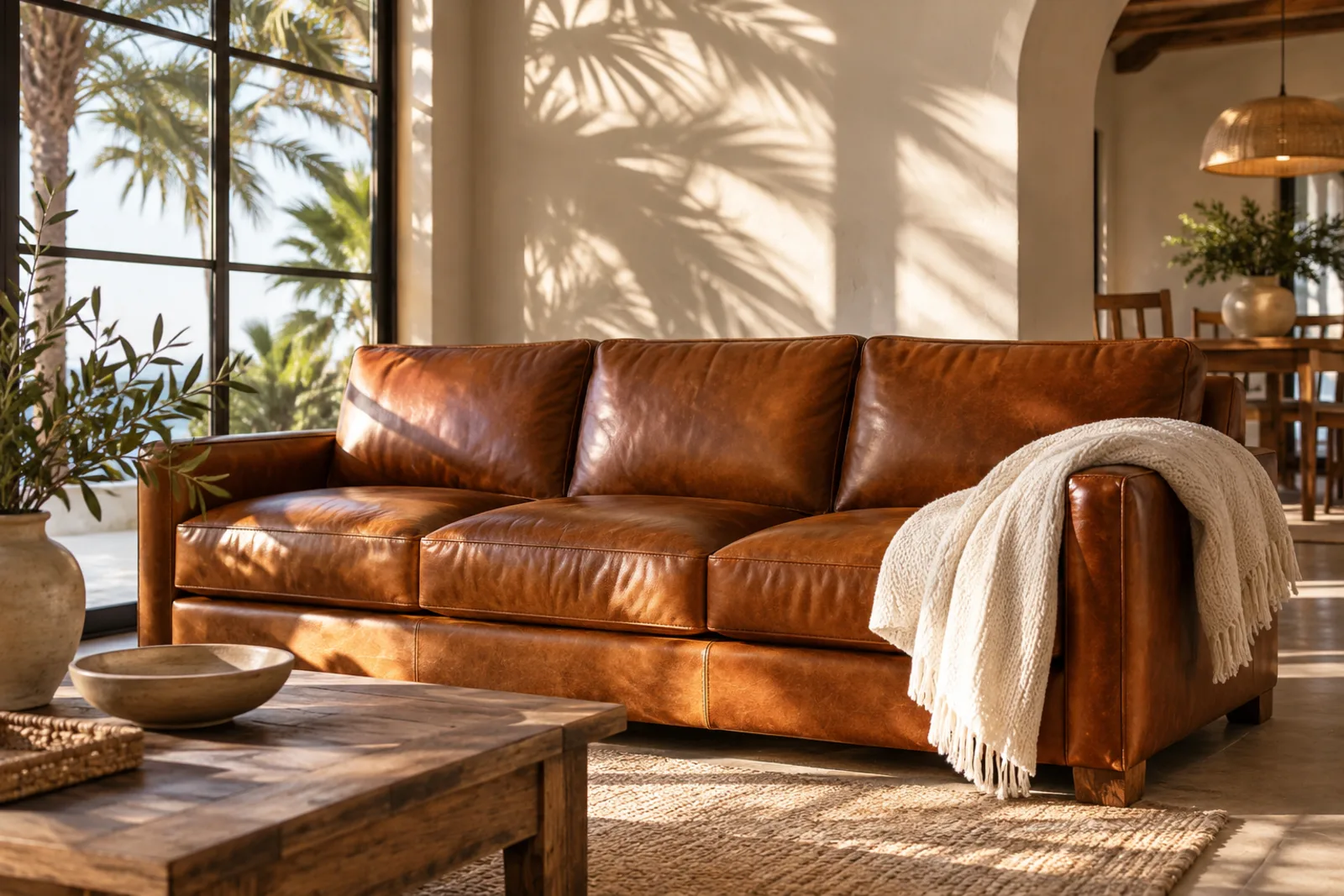
Leather Furniture Care in Southern California: Sun, Santa Anas and Salt Air
Short answer on leather furniture care in Southern California: keep leather out of direct sun, clean it every two to three months and condition it lightly after each cleaning — more often during Santa Ana wind season, in inland valleys and in homes that run the air conditioning most of the year. Near the coast, clean a little more often to remove salt and body oil, and make sure the room is ventilated so damp air does not lead to mildew.
Leather furniture in Southern California lives a different life than in Seattle or Chicago. Strong sun almost all year, hot dry winds in the fall, air conditioning for months at a time, and salty, damp air a few blocks from the beach all leave their mark. In the workshop we see the results every week: sun-faded backrests, dry and cracked seats in Riverside and San Bernardino homes, darkened armrests in beach rentals. Here is how to care for leather furniture in Southern California, region by region and season by season.
Start with your leather type
Care depends on the leather more than the climate. Most sofas are pigmented (protected) leather, which handles sun and spills well. Aniline and semi-aniline leather fade, dry and stain faster — they need more protection here. A drop of water on a hidden spot tells you which one you have: it beads on pigmented leather and soaks into aniline. See how to identify your leather and aniline vs semi-aniline vs pigmented leather.
Sun: the biggest risk for leather in Southern California
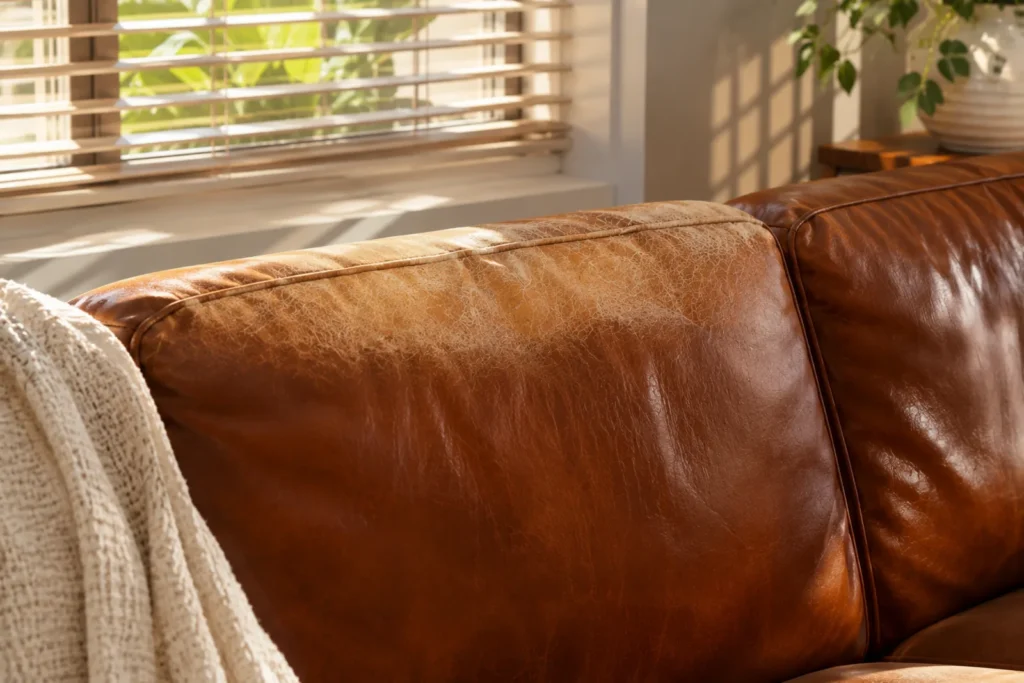
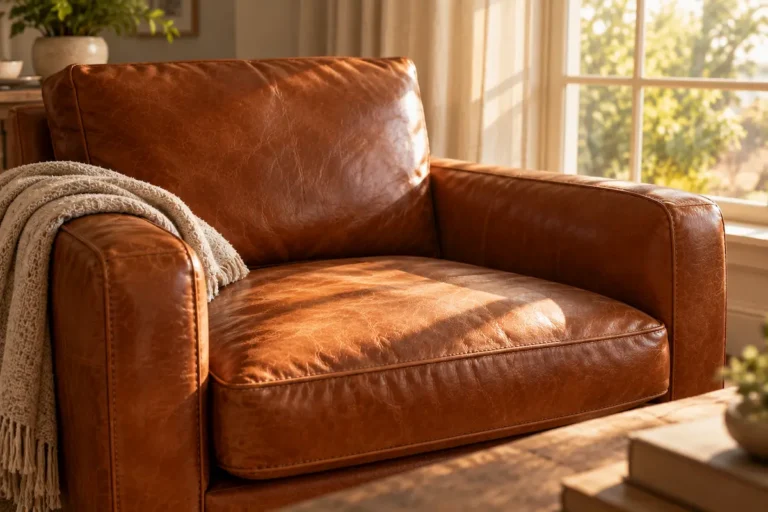
The sun is strong here in every season, and big windows and sliding doors are everywhere. Direct sunlight fades the color and dries the surface, usually along the top of the backrest and on the arm closest to the window. On aniline leather the change can be visible within a single summer.
- Keep leather furniture out of direct sun, or close blinds and shades during the brightest hours.
- UV-filtering window film on south- and west-facing glass helps a lot without darkening the room.
- Rotate cushions and, if you can, turn the sofa every few months so one side does not take all the light.
- Throw a light blanket over the most exposed area in summer.
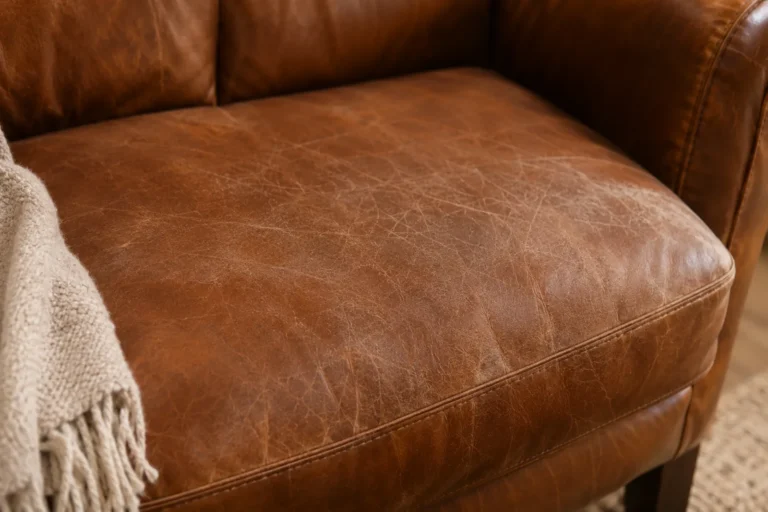
- Faded areas cannot be cleaned back; they need recoloring.
Santa Ana winds and dry air
In the fall and early winter, Santa Ana winds bring hot, very dry air from the desert. Indoor humidity can drop sharply for days, and leather loses moisture fast. Air conditioning in summer and heating in winter dry it out further.
- During Santa Ana days, keep windows closed and run a humidifier in the room if you have one; aim for roughly 40–50% humidity.
- Check the leather after a windy week: if it feels stiff or looks dull, give it a thin coat of conditioner.
- Keep the sofa away from AC vents, heaters and fireplaces.
- Our guide to a dry leather couch explains how to bring stiff leather back.
Inland valleys: heat
In the Inland Empire, the San Fernando Valley and other inland areas, summer days regularly pass 100°F. Rooms with west-facing windows heat up even with the AC on.
- Condition every two to three months instead of every three to six.
- Use blinds in the afternoon; a hot room plus direct sun is the fastest way to crack leather.
- If the sofa is next to a wall that gets afternoon sun, move it a few inches away.
Coastal homes: salt, damp and mildew
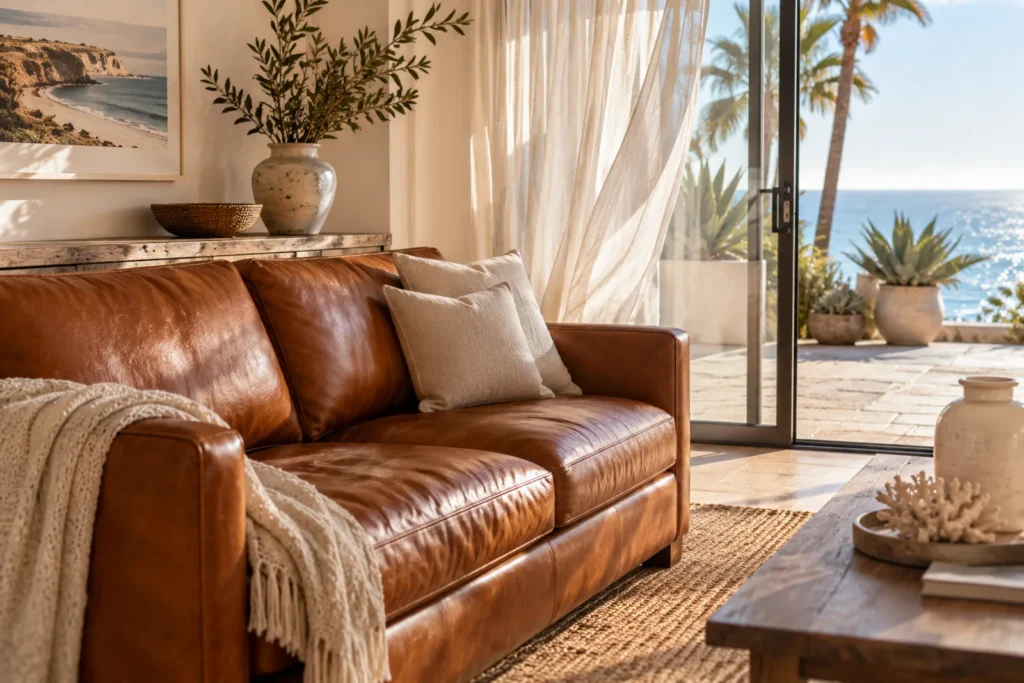
Near the ocean the air is milder but damper, especially during the May and June marine layer. Salt and moisture settle on everything, and closed-up vacation homes can develop mildew.
- Wipe leather with a barely damp cloth more often, and clean it every two to three months to remove salt and body oil.
- Ventilate rooms that stay closed; leather needs moving air.
- Do not store leather furniture under plastic in a beach garage or storage unit.
- If you see white or grey fuzzy spots, follow our guide on mold on leather furniture.
- Wet swimsuits and sunscreen on leather are a classic beach-house problem: sunscreen and body oil darken armrests and headrests. See how to remove oil stains from a leather couch.
A year-round care routine for Southern California
- Weekly: vacuum crumbs from seams and dust with a dry microfiber cloth.
- Every one to two weeks: wipe armrests and headrests with a barely damp cloth — sunscreen, hand cream and body oil collect there.
- Every two to three months: clean the whole piece with a gentle leather cleaner and apply a thin layer of leather conditioner.
- After Santa Ana winds or a heat wave: check for dryness and condition lightly if needed.
- Once a year: look for fading, cracks and worn color on armrests and seat edges, and turn the sofa if one side gets more sun.
The full step-by-step method is in our leather couch care routine.
What not to do
- Do not leave leather in direct sun to “dry” after cleaning.
- Do not use kitchen oils to fight dryness — they darken leather and go rancid in the heat.
- Do not use alcohol wipes or all-purpose sprays; they strip the finish.
- Do not put a hot laptop or a heating pad on leather for long periods.
When care is not enough: Leather Repair Center now serves Orange County
Sun-faded color, cracked seats and worn armrests cannot be fixed with cleaner and conditioner — they need recoloring or repair. Leather Repair Center has started serving Orange County, driving up from San Diego to repair leather furniture on site, in your home. Their Orange County services:
- Leather furniture repair — scratches, tears, cracks and burns
- Leather couch and sofa repair — sofas, sectionals and loveseats
- Leather recoloring — for sun-faded or patchy color
- Leather recliner repair
- Eames lounge chair repair
- Couch cushion foam replacement — for flat or sinking cushions
They cover Irvine, Newport Beach, Huntington Beach, Costa Mesa, Laguna Beach, Mission Viejo, Anaheim, San Clemente and nearby cities, give quotes from a few photos and back repairs with a one-year warranty. In San Diego County, see their leather couch and sofa repair in San Diego.
For what you can fix yourself first, read leather sofa repair: what you can fix at home and when to call a pro.
What we use in the workshop
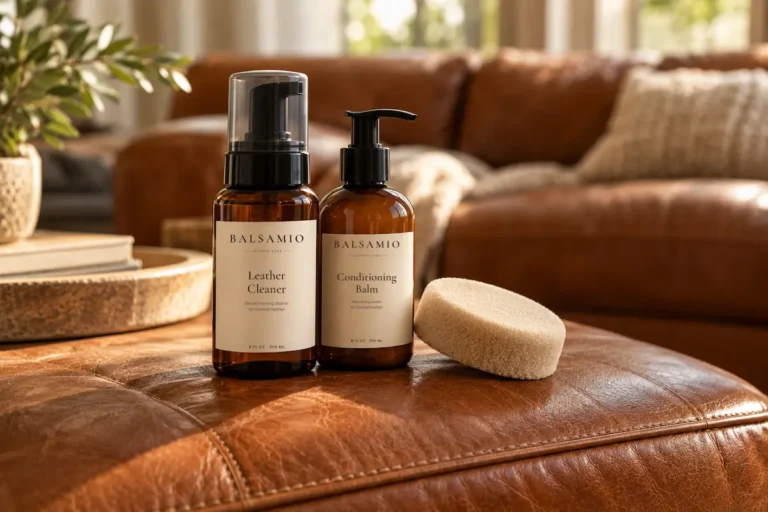
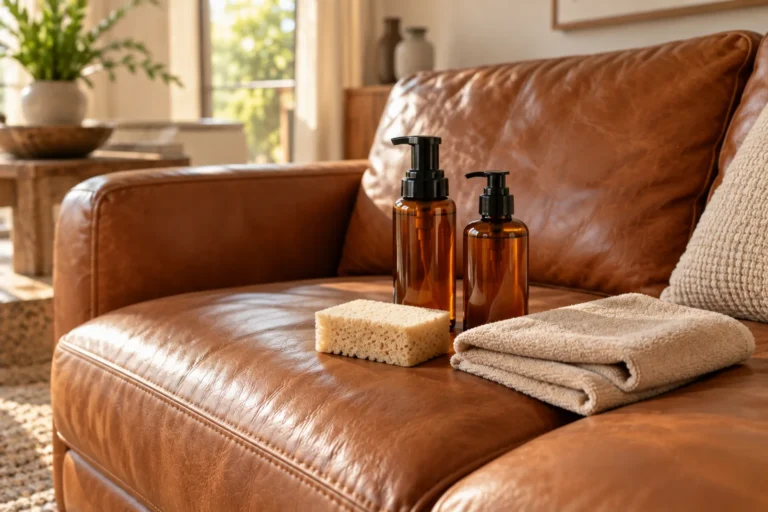
In sunny, dry Southern California homes we clean with a gentle foaming cleaner every few months and follow with a thin layer of conditioning balm. Our Leather Care Kit puts both in one box, with the sponge and cloths to apply them.
Frequently asked questions
How often should you condition leather furniture in Southern California?
Every two to three months in most homes, and right after Santa Ana wind periods or heat waves. Coastal homes with mild, damp air can stretch it to three to four months.
Does the California sun damage leather furniture?
Yes. Direct sunlight fades the color and dries the leather, especially aniline leather. Blinds, UV window film and moving the sofa out of direct light prevent most of it.
How do I protect leather furniture from Santa Ana winds?
Keep windows closed, run a humidifier if you have one, and check the leather afterwards; condition lightly if it feels stiff or dull.
Can salty ocean air damage leather?
Salt and damp air leave residue and can lead to mildew in closed rooms. Regular cleaning and good ventilation prevent it.
Who repairs leather furniture in Orange County?
Leather Repair Center now serves Orange County with on-site leather furniture, sofa, recliner and Eames chair repair, recoloring and cushion foam replacement.
Related: Leather Couch Care: A Complete Routine · Dry Leather Couch · Leather Sofa Repair