Dry Leather Couch? How to Restore It and Keep It Soft
Short answer on a dry leather couch: clean it first, then apply a leather conditioner in thin layers over two or three days until the leather feels supple again. Most dry, stiff, dull sofas come back to life this way within a week. If the color has worn off or the surface has started to crack, conditioning softens the leather but does not restore the finish — that needs a repair.
Dry leather is the slow problem behind most of the damage we see: cracks, peeling armrests, faded seats. It does not happen overnight. Leather slowly loses moisture to heating, sunlight and time, and body oil and grime break down the surface while nobody is looking. The good news is that a dry leather couch is usually still fully recoverable — if you catch it before the finish breaks.
Signs your leather couch is too dry
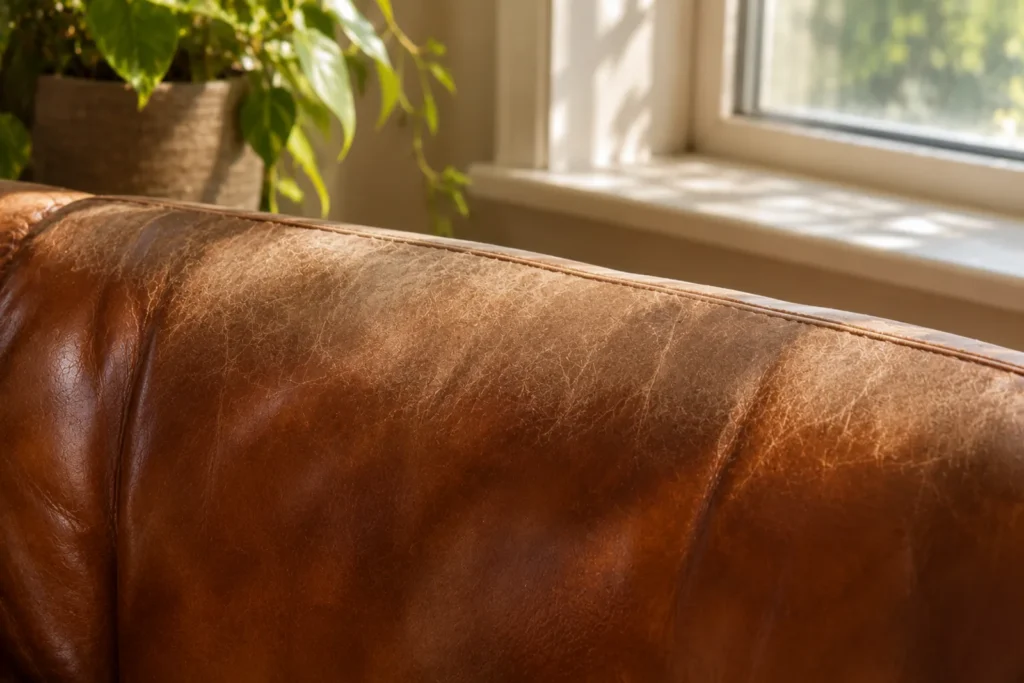
- The leather feels stiff, papery or rough instead of soft and slightly warm.
- The surface looks dull and matte, especially on seats and armrests.
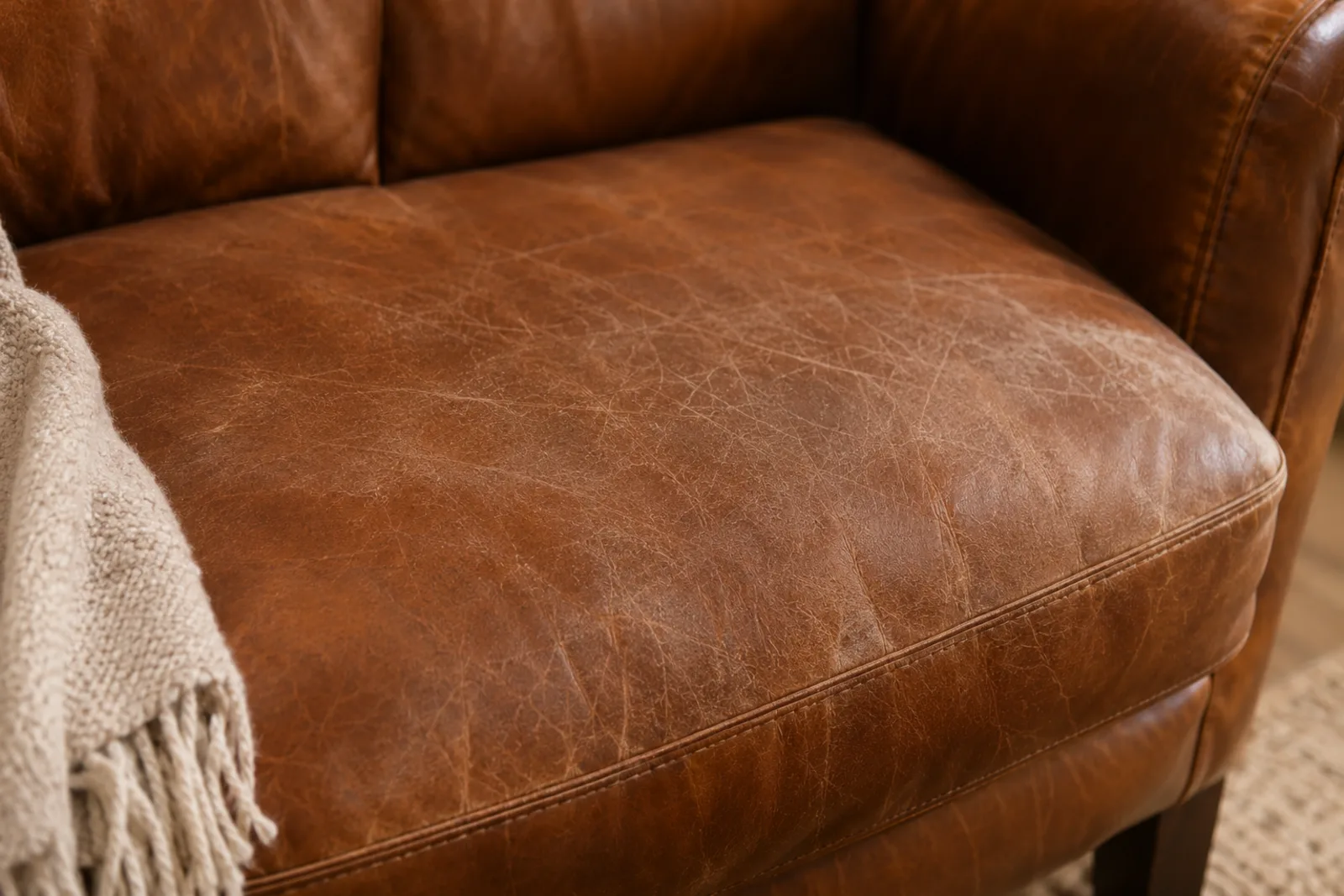
- Fine lines and deep creases appear where people sit and lean.
- The color looks lighter or faded in patches.
- A drop of water on a hidden spot of semi-aniline or aniline leather disappears almost instantly.
- Bending a fold of leather leaves pale lines that do not fade.
If you already see a network of cracks or flakes of color coming off, jump to how to fix a cracked leather couch.
Why leather dries out
- Heat and dry air. Radiators, fireplaces, heating vents and dry winter air pull moisture out of the hide.
- Sun. Direct sunlight dries and fades the surface, usually on the top of the backrest and one armrest.
- Harsh cleaners. Alcohol wipes, all-purpose sprays, dish soap and vinegar strip oils from the leather.
- Time without care. Leather that is never conditioned dries out gradually, even in a perfect room.
- Body oil and dirt. They do not moisturize leather — they sit in the finish and break it down, which is why armrests dry and crack first.
Check your leather type first
How much product the leather takes depends on the type. Pigmented (finished) leather has a protective coating and needs only thin layers. Semi-aniline and aniline leather absorb more and can darken, so test on a hidden spot first. Our guide on how to identify your leather explains the water drop test.
How to restore a dry leather couch
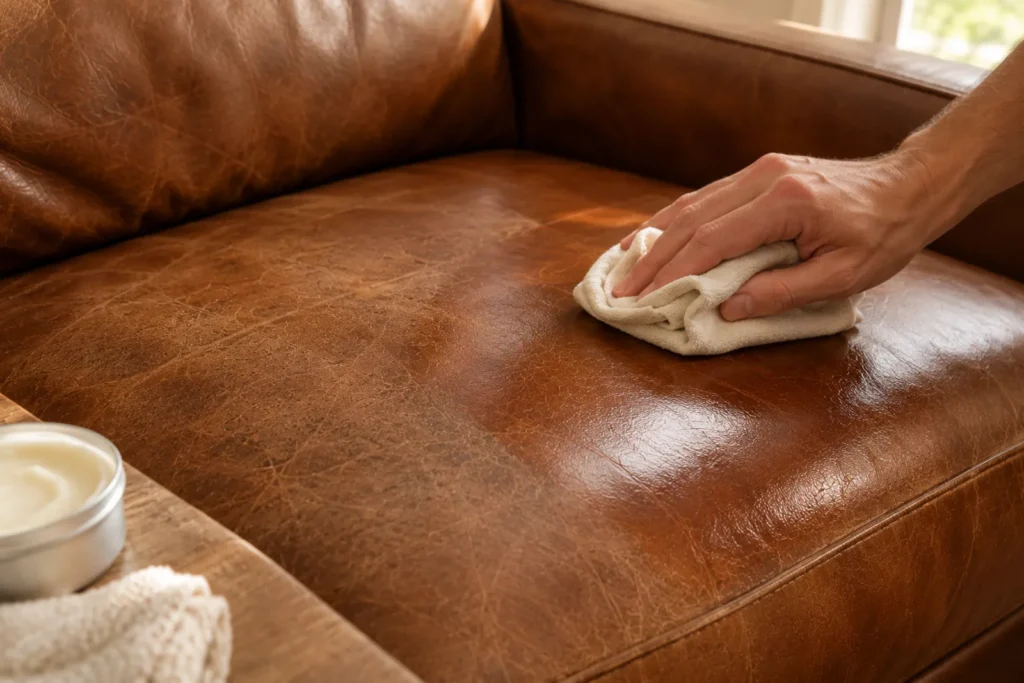
1. Vacuum
Use a soft brush attachment over the whole sofa, including seams and the gaps between cushions.
2. Clean before you condition
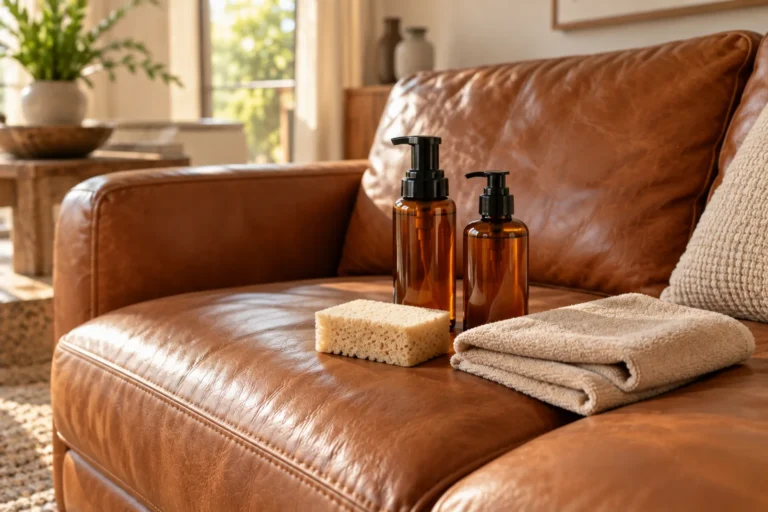
Conditioner applied over dirt seals the dirt in and feels greasy. Work a gentle leather cleaner into a foam on a sponge, clean one panel at a time and wipe the dirt off with a clean cloth. The full method is in how to clean a leather couch.
3. Let it dry
An hour or two at room temperature. No hair dryer and no heater.
4. Apply conditioner in thin layers
Put a small amount of leather conditioner on a soft cloth, not directly on the leather, and massage it in with small circular movements. Cover whole panels from seam to seam so the color stays even.
5. Wait and repeat
Let it absorb for several hours or overnight, then buff with a dry cloth. Very dry leather usually needs a second and sometimes a third thin coat over two or three days. Stop when the leather feels supple and no longer drinks the product.
6. Judge the result in daylight
The leather should feel soft and bend easily, with an even, soft sheen. Fine lines look less pale. Deep creases in old leather stay — they are part of how leather ages.
What not to use on a dry leather couch
- Olive oil, coconut oil and other kitchen oils. They darken the leather for a few days, then soak in unevenly, turn sticky and can go rancid.
- Petroleum jelly and baby oil. They sit on the surface and attract dust.
- Mink oil and heavy waxes made for boots. Too heavy for upholstery; they darken and leave a film.
- Furniture polish and silicone sprays. Instant shine, no moisture, and a slick film that blocks later care — see leather polish vs leather conditioner.
- A thick layer of conditioner. More is not better. The excess stays on top as a greasy film.
How to refresh a leather couch that looks tired
Sometimes the leather is not very dry, just dull and grimy. In that case a full clean already makes the biggest difference, followed by one thin coat of conditioner and a good buff with a dry microfiber cloth. Healthy furniture leather has a soft sheen, not a gloss.
How to keep it from drying out again
- Keep the sofa at least a couple of feet from radiators, fireplaces and heating vents.
- Keep it out of direct sun or close the blinds in the brightest hours.
- In dry winters, a humidifier helps leather as much as it helps wooden furniture.
- Clean every three months and condition lightly afterwards; armrests and headrests more often. Our guide on how often to condition a leather sofa has a schedule.
- Avoid wipes and household sprays.
When conditioning is not enough
- the finish is cracking or peeling
- the color has worn through on armrests or seat edges
- the leather has faded unevenly in the sun
- the leather is torn or split
Those need a repair rather than more conditioner. See leather sofa repair: what you can fix at home and when to call a pro.
What we use in the workshop
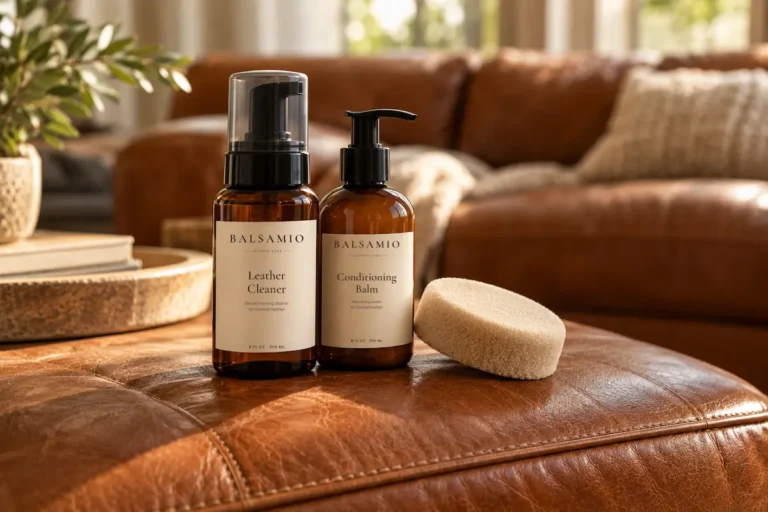
For a dry sofa we clean with a gentle foaming cleaner first, then build up thin layers of conditioning balm over a few days. Our Leather Care Kit puts both in one box, with the sponge and cloths to apply them.
Frequently asked questions
How do you fix a dry leather couch?
Vacuum it, clean it with a leather cleaner, let it dry, then apply a leather conditioner in two or three thin layers over a few days until the leather feels supple.
How do I know if my leather couch is dry?
It feels stiff or papery, looks dull or faded, and shows fine lines and pale creases where people sit. On absorbent leather a drop of water disappears almost instantly.
Can I use olive oil on a dry leather couch?
It is not a good idea. Kitchen oils darken the leather unevenly, attract dirt, turn sticky and can go rancid.
Can dry leather be restored?
Yes, as long as the finish is intact. Cleaning and conditioning restore softness. Cracked or worn-through finish needs a repair.
How often should a leather couch be conditioned?
For most homes, after each full cleaning — about every three to six months. Dry climates, heating and sunny rooms need it more often.
Related: How Often Should You Condition a Leather Sofa? · How to Fix a Cracked Leather Couch · Leather Couch Care: A Complete Routine