How to Get Ink Off a Leather Couch (Without Making It Worse)
Short answer on how to get ink off a leather couch: act while the ink is fresh, blot it (never rub), clean the spot with a gentle leather cleaner, and only if a mark remains, dab it with a cotton swab barely dampened with isopropyl alcohol — on finished (pigmented) leather only, after a spot test. Wipe, let it dry and condition. On aniline leather, or if the ink has been there for weeks, stop and call a leather professional.
Ink is one of the most common reasons people bring leather furniture to a restoration workshop — and often the ink was the smaller problem. The bigger damage came afterwards: a patch scrubbed with hairspray, nail polish remover or a melamine sponge until the color came off along with the ink. The good news is that fresh ballpoint on a typical family sofa often comes off at home. Knowing how to get ink off a leather couch safely comes down to two things: which leather you have, and when to stop.
First, check what kind of leather you have
How ink behaves depends almost entirely on the finish. Most sofas sold today are finished (pigmented) leather: a colored protective coating sits on top, so fresh ink stays on the surface for a while and can often be lifted. Aniline and semi-aniline leather have little or no coating, so ink soaks into the hide within minutes.
The quickest check is the water-drop test: put one drop of water on a hidden spot. If it beads, the leather is finished; if it darkens and soaks in, it is aniline or semi-aniline. Our guide on how to identify your leather covers this and three other checks.
What you need
- Clean white microfiber cloths or paper towels — white, so you can see what lifts off
- A gentle, pH-balanced leather cleaner
- Cotton swabs
- Isopropyl (rubbing) alcohol, 70% — for finished leather only
- A leather conditioner for afterwards
- Good light: a window, or a phone flashlight held at a low angle
How to get ink off finished leather, step by step
1. Blot fresh ink right away
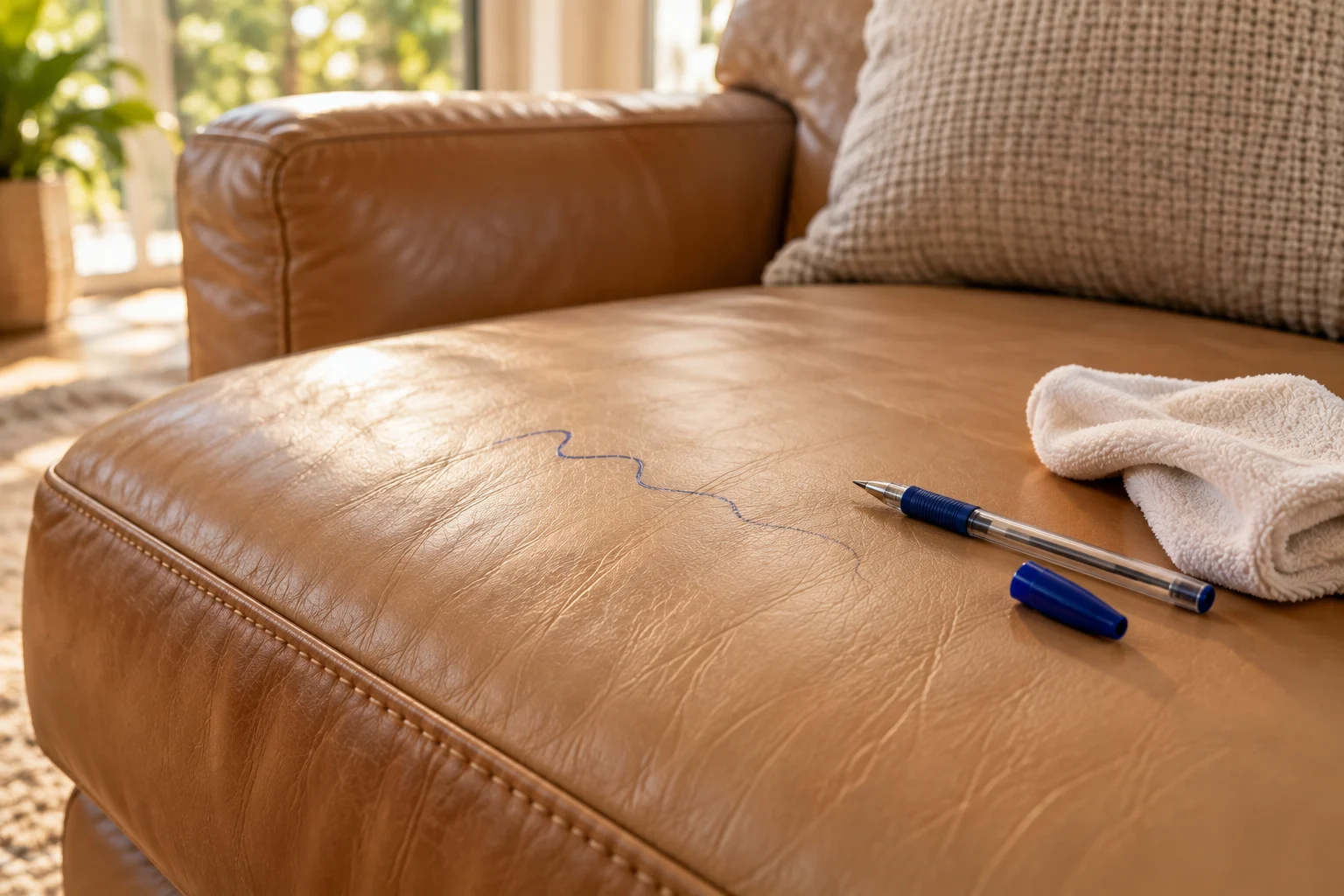
If the ink is still wet, press a clean white cloth onto it and lift straight up. Repeat with a clean part of the cloth. Don’t wipe sideways: that turns a thin line into a wide smear that is much harder to remove.
2. Spot-test on a hidden area
Pick a spot of the same leather that nobody sees — under a seat cushion, the back of the sofa, the skirt near the floor. Try every product there first and look at the cloth: if the sofa’s color comes off onto it, don’t use that product on the visible area.
3. Start with a leather cleaner
Put a small amount of cleaner on a cloth or sponge (not directly on the leather), work it gently over the ink in small circles, then wipe with a clean, slightly damp cloth. Fresh ballpoint on finished leather often fades or disappears at this stage. Give it two or three rounds before moving on.
4. If a mark remains, dab with alcohol — carefully
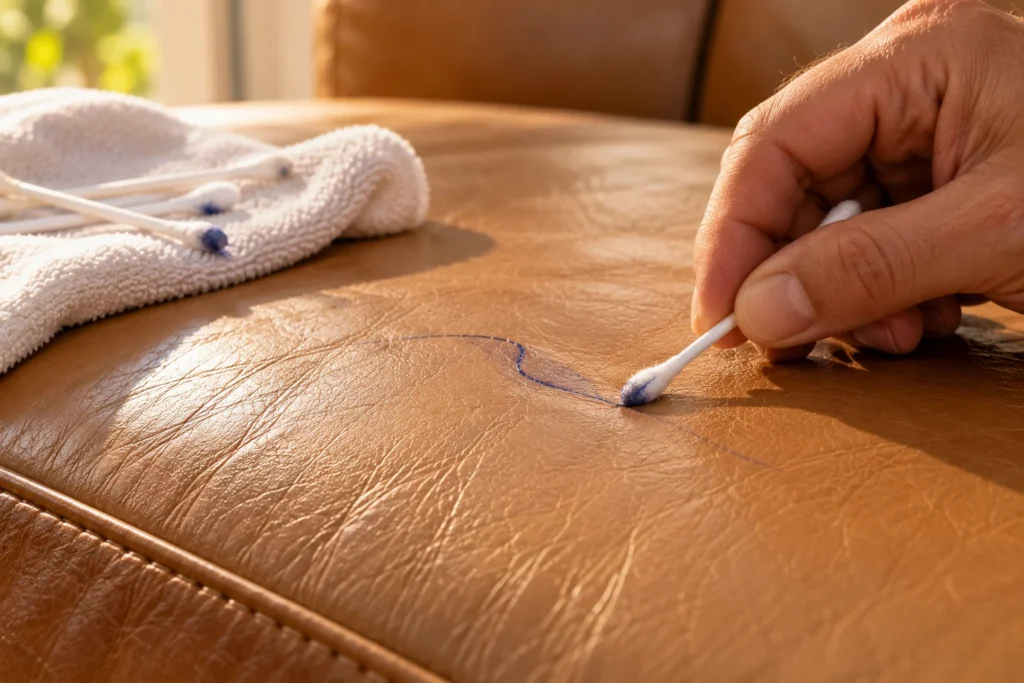
Dip a cotton swab in isopropyl alcohol and squeeze it almost dry. Dab — don’t rub — only along the ink line, turning to a clean side of the swab each time. Alcohol dissolves ink, but it also softens the finish and can lift the color, so keep contact short, work a few seconds at a time and check the swab often. The moment you see the sofa’s own color on the swab, stop.
5. Clean, dry and condition
Wipe the area with a slightly damp cloth to remove residue and let it air-dry completely. Then apply a thin layer of conditioner over the whole cushion or panel — not just the spot — so the treated area doesn’t look different from the rest. Our guide on leather cleaner vs leather conditioner explains why the order matters.
Ink on aniline or semi-aniline leather
On unfinished leather, ink behaves like a dye: it goes into the fibers, and alcohol, cleaners and even water tend to push it deeper and leave a ring around the mark. What you can do safely at home is limited:
- Blot wet ink immediately with a dry white cloth.
- Don’t use alcohol, cleaners or water on the mark.
- Leave it and ask a leather professional — the most reliable result is usually careful ink removal followed by color matching.
It’s frustrating advice, but on aniline leather a small blue line is far easier to fix than a large pale patch.
Old, dried or large ink marks
Ink that has sat for weeks — especially where the sofa gets sun and warmth — bonds with the finish and is much harder to lift. A leather cleaner may lighten it slightly; alcohol usually starts removing the finish before it removes the ink. There are dedicated leather ink-remover products, but results vary with the leather and the finish, so treat them like anything else: hidden spot first, small area, frequent checks.
Large marks from a leaking pen, children’s drawings across a whole cushion, or ink on white and cream leather are usually faster and cheaper to hand to a professional than to repair after a home attempt.
What not to use on ink
- Hairspray. An old trick from the days when hairspray was mostly alcohol. Modern formulas add resins that leave a sticky film on top of the ink.
- Nail polish remover or acetone. Dissolves leather finishes in seconds and leaves a pale, rough patch.
- Melamine sponges (“magic erasers”). They work as a fine abrasive: the ink disappears together with the top layer of color.
- Household sprays, bleach and baby wipes. Made for other surfaces; they can dry out or discolor leather.
- Hard scrubbing. It spreads the ink and wears through the finish. Short, gentle passes work better.
Markers, newspaper and dye transfer from jeans
Permanent marker behaves like old ink: on finished leather the same careful steps sometimes help; on aniline, call a professional. Washable marker usually comes off with a leather cleaner. Newspaper print and dye transfer from new jeans — the blue haze on light leather seats — usually sit on the surface and often respond to a regular leather cleaner used a few times, without alcohol.
When to call a professional
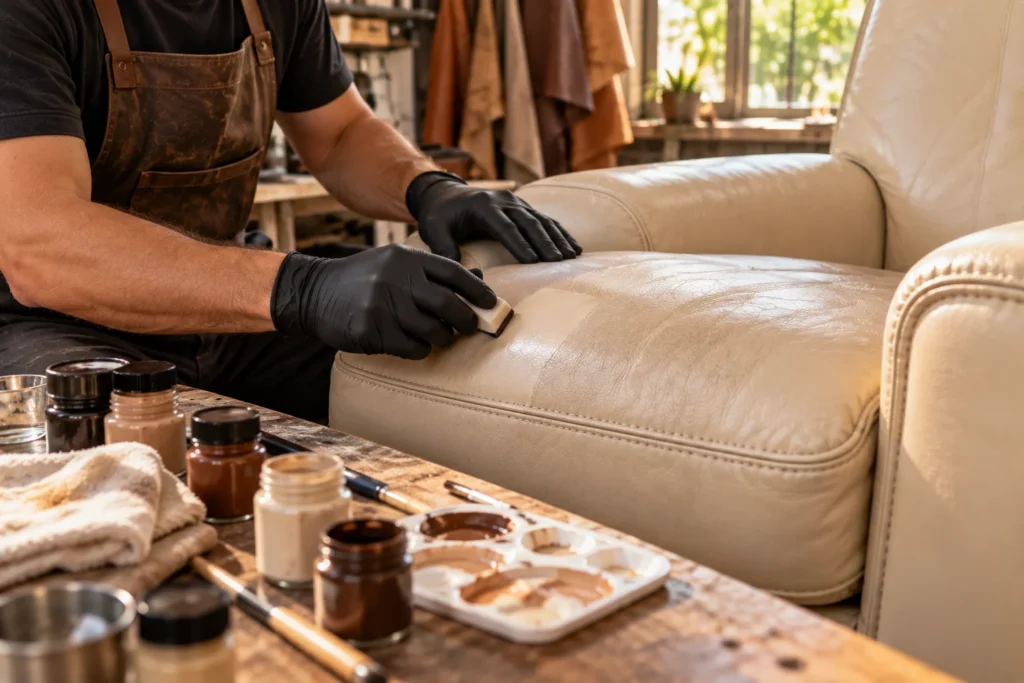
Call a leather repair specialist if:
- the leather is aniline or semi-aniline
- the mark is large, old, or has been there for weeks
- the leather is white, cream or pastel
- color has already come off onto your cloth or swab
- the ink is on a seam, a crease or an already cracked area
A good restorer can remove what is left of the ink and blend the color so the repair disappears into the panel — something that is very hard to do at home.
For everyday dirt rather than ink, see our leather couch cleaner page.
What we use in the workshop
For fresh marks on finished leather we start with a gentle foaming cleaner and finish with a light conditioning balm. Our Leather Care Kit puts both in one box, with the sponge and cloths to apply them.
Frequently asked questions
Does rubbing alcohol damage leather?
It can. Alcohol dissolves ink, but it also softens and can strip the protective finish and dries the leather. On finished leather, use it only on a barely damp cotton swab, in short dabs, after a spot test — and condition afterwards. Don’t use it on aniline leather.
Does hairspray remove ink from leather?
It sometimes worked with older formulas that were mostly alcohol. Modern hairsprays contain resins and other ingredients that can leave a sticky film. A leather cleaner first, then carefully dabbed alcohol if needed, is easier to control.
Can I use a magic eraser on a leather couch?
We don’t recommend it. Melamine sponges work by fine abrasion, so on leather they remove the finish and color together with the mark.
How do I get ballpoint pen off a leather car seat?
Most car seats are finished leather, so the same steps apply: blot, leather cleaner, then carefully dabbed alcohol if a mark remains. On perforated seats keep liquids to a minimum — see how to clean leather car seats.
Related: How to Clean a Leather Couch Without Damaging It · How to Identify Your Leather · How Often to Condition a Leather Sofa