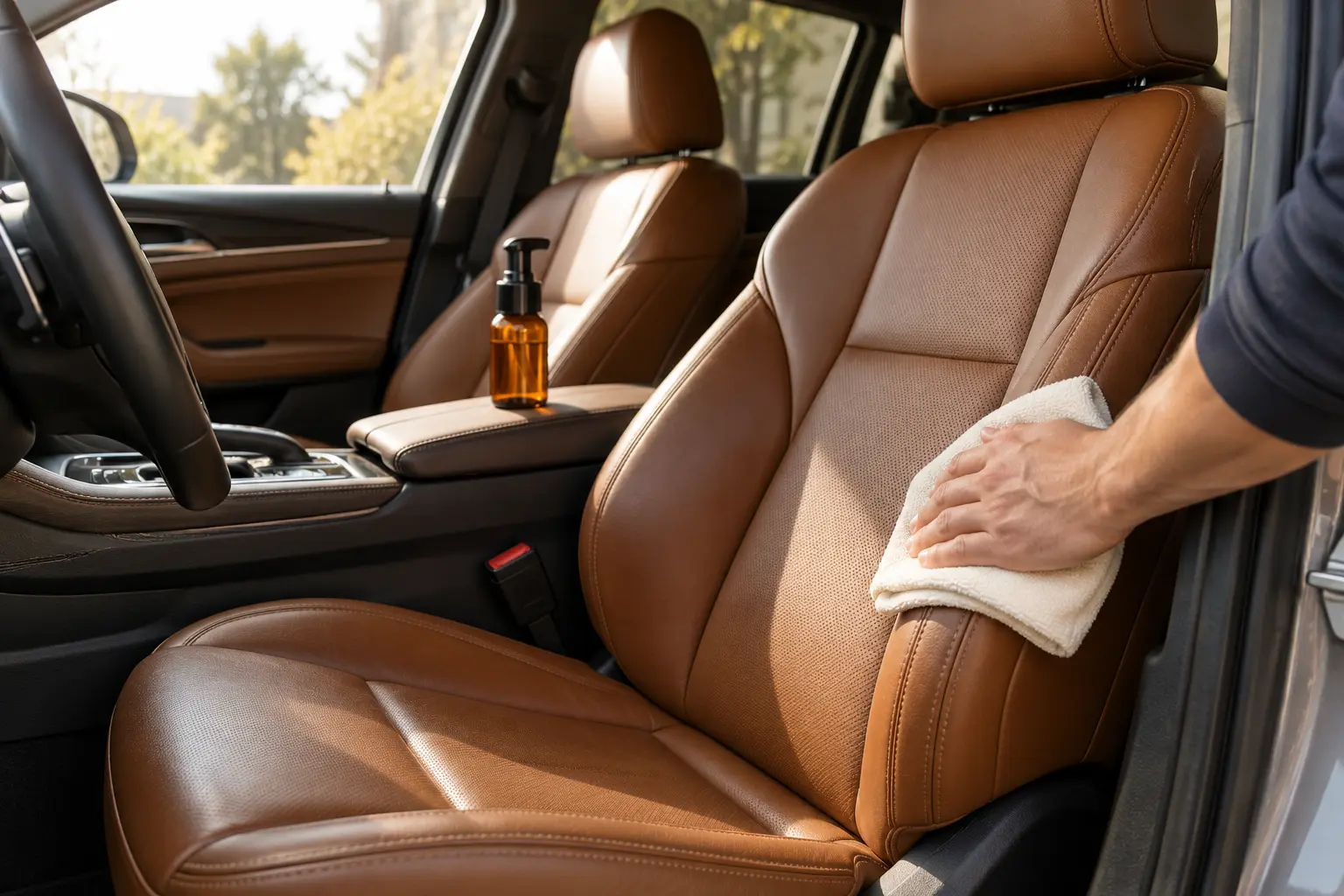
How to Clean Leather Car Seats (Including Perforated Seats)
Short answer: to clean leather car seats, vacuum the seams, apply a gentle leather cleaner to a soft brush or sponge (never spray it straight onto the seat), work in small sections, wipe with a microfiber cloth, let it dry, then condition. On perforated or ventilated seats, use as little liquid as possible so nothing collects in the holes.
Car leather has a harder life than furniture: heat, direct sun through the windows, jeans rubbing on the side bolsters, and constant getting in and out. The good news is that almost all modern car leather is finished (pigmented), so it responds well to a simple clean-and-condition routine.
What you need
- A vacuum with a crevice tool and a soft brush attachment
- A pH-balanced leather cleaner (foam works best on car seats)
- A soft interior brush or a sponge
- Two or three clean microfiber cloths
- Leather conditioner
Step-by-step: how to clean leather car seats
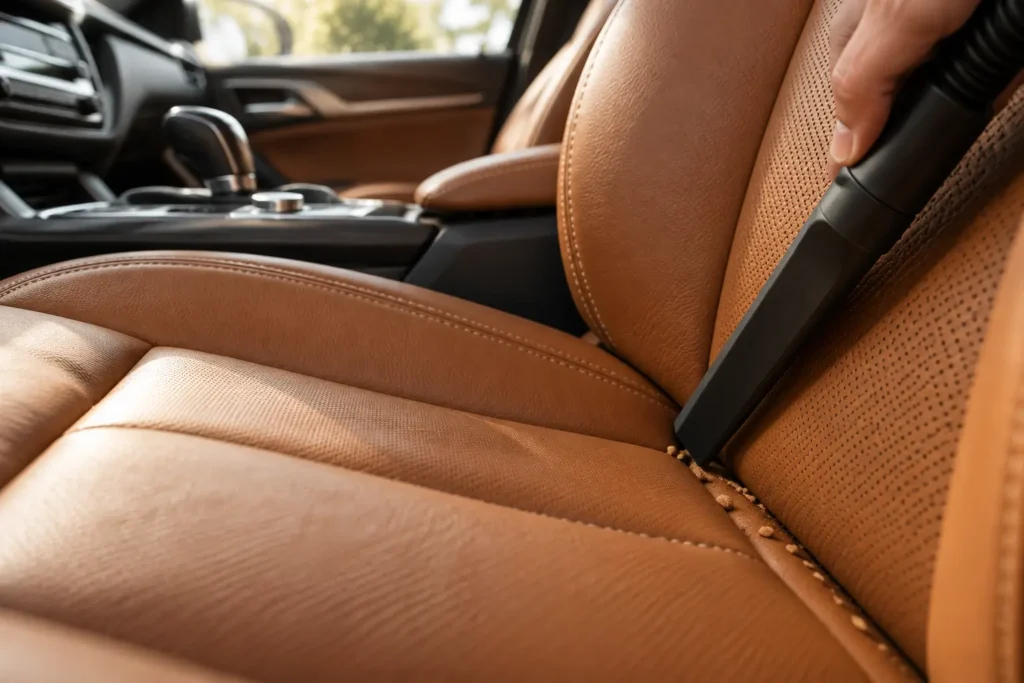
1. Vacuum the seams and crevices
Slide the seats forward and back to reach every gap. Sand and grit in the seams act like sandpaper every time someone sits down, so get them out before you touch the leather with anything wet.
2. Spot-test on a hidden area
Try the cleaner on the side of the seat base or the back of the seat, let it dry, and check that the color and finish look unchanged.
3. Apply cleaner to the brush, not the seat
Put the foam on a soft brush or sponge and work one panel at a time — seat base, side bolster, backrest, headrest. Gentle circular motions are enough. On textured or grained leather, the brush lifts dirt out of the grain much better than a cloth.
4. Wipe immediately
Wipe each section with a clean microfiber cloth before the cleaner dries. The driver’s side bolster and the top of the seat base are usually the dirtiest — expect a darker cloth there.
5. Let the seats dry
Leave the doors or windows open for 30–60 minutes in the shade. Don’t use a heat gun or run the seat heaters to speed things up.
6. Condition
Apply a thin layer of conditioner with a clean applicator, let it absorb, then buff lightly. Car leather dries out faster than furniture because of heat and UV, so this step matters more here.
Perforated and ventilated seats
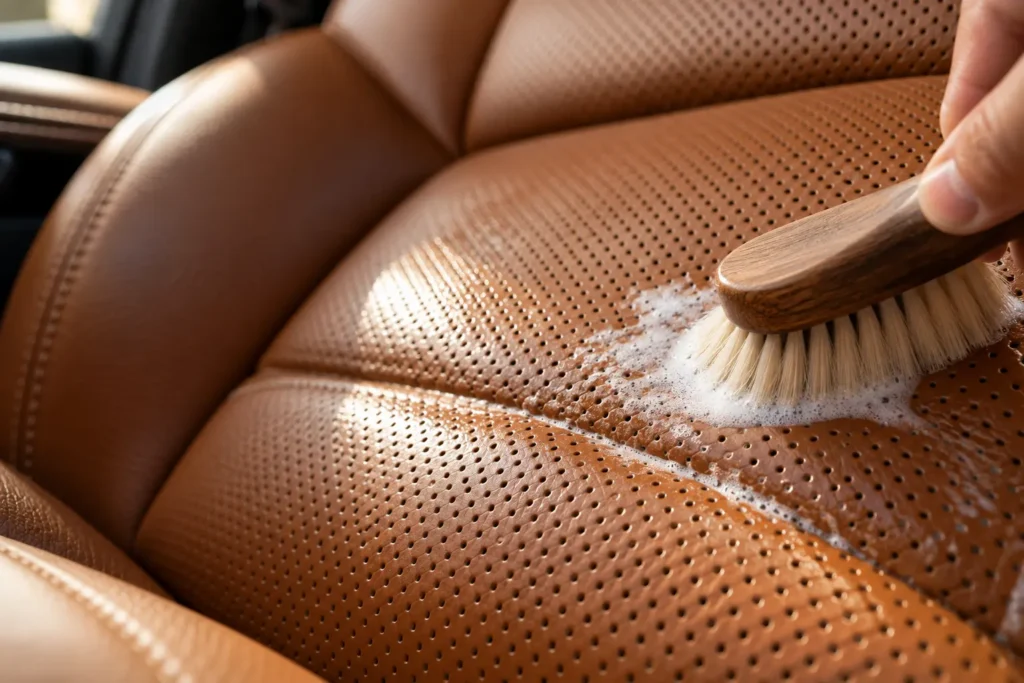
Perforated seats have hundreds of small holes for ventilation or cooling. Any liquid that pools in them can dry into white residue or reach the foam underneath. Use foam rather than liquid, apply it to the brush only, and wipe with a barely damp cloth. Condition with a very small amount of product and buff off any excess straight away.
What not to use on car leather
- All-purpose interior cleaners — many are too harsh for the leather’s top coat.
- Glossy silicone dressings — they leave seats shiny and slippery and attract dust.
- Magic erasers — they abrade the finish and remove color, especially on bolsters.
- Household wipes — convenient, but they can leave residue and dry the leather over time.
How often to clean leather car seats
Wipe with a dry microfiber cloth every week or two. Do a full clean and condition every 3 months — more often in hot, sunny climates or if you have kids and pets in the car.
Many of the same rules apply at home — see how to clean a leather couch without damaging it.
When to call a professional
Cleaning won’t fix worn-through color on the bolsters, cracks in the finish, or tears. Those need repair and re-coloring by a leather technician. In San Diego? Our own workshop, Leather Repair Center, repairs automotive leather every day.
What we use in the workshop
The Balsamio Leather Care Kit — a gentle foaming cleaner, a light conditioning balm, an applicator sponge and two microfiber cloths — works on finished automotive leather as well as furniture.
Frequently asked questions
Can I use the same products on my car seats and my sofa?
Yes, if both are finished (pigmented) leather — which almost all car seats and most sofas are. Always spot-test first.
How do I clean perforated leather seats?
Apply foam to a brush, never directly to the seat, work gently and wipe right away with a barely damp cloth so no liquid collects in the holes.
Is it OK to condition car leather in hot weather?
Condition in the shade when the seats are cool to the touch. Product applied to hot leather dries too fast and can streak.