Can You Use Baby Wipes on a Leather Couch? Vinegar and Soap Too
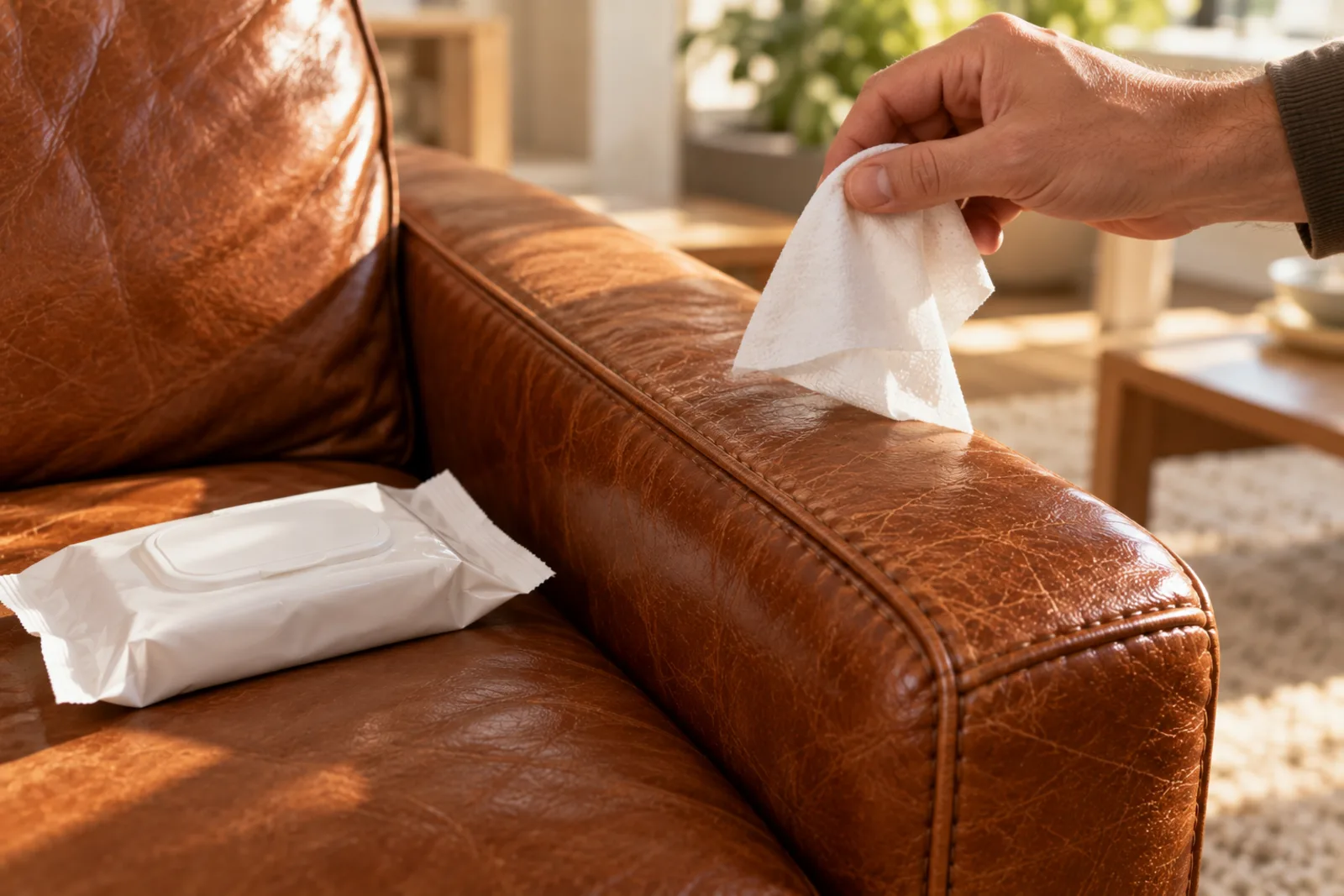
Short answer: can you use baby wipes on a leather couch? One wipe on finished (pigmented) leather to catch a fresh spill will not ruin it, but baby wipes are not a leather cleaner. Used regularly, they leave a film of lotion and cleansing agents that dulls the finish, attracts dirt and can dry the leather over time. On aniline and semi-aniline leather, skip them completely. The same goes for vinegar and household soap: occasional, diluted use is survivable on finished leather, but none of them is a good routine.
In a restoration workshop we rarely see a sofa ruined by one cleaning. We see sofas worn down by years of the same convenient habit: a pack of wipes kept by the couch, a vinegar spray from a cleaning blog, a squirt of dish soap in a bucket. The damage is slow — a dull patch, a sticky armrest, color lifting on the seat edge — so nobody connects it to the cleaner. Here is what each of these products actually does to leather, and what to use instead.
Why household cleaners behave differently on leather
Leather is not a hard surface like a countertop. Finished leather is a hide with a thin, flexible colored coating on top; aniline leather has almost no coating at all. Two things follow from that.
- Leather is slightly acidic. Most household cleaners are alkaline, and many wipes are formulated for skin or kitchen surfaces, not for a leather finish. Repeated use of the wrong chemistry slowly weakens the coating and dries the leather under it.
- Leather is not rinsed. You rinse a plate after dish soap. On a sofa, whatever you wipe on mostly stays there. Residue builds up, feels tacky and holds dirt.
First, check your leather type
Everything below depends on it. Put a drop of water on a hidden spot. If it beads and sits on the surface, the leather is finished (pigmented) and fairly forgiving. If it soaks in and darkens the spot, it is aniline or semi-aniline, and almost every household product will leave a mark. Our guide on how to identify your leather has the full set of tests. Suede and nubuck are a different material altogether — none of this applies to them.
Baby wipes
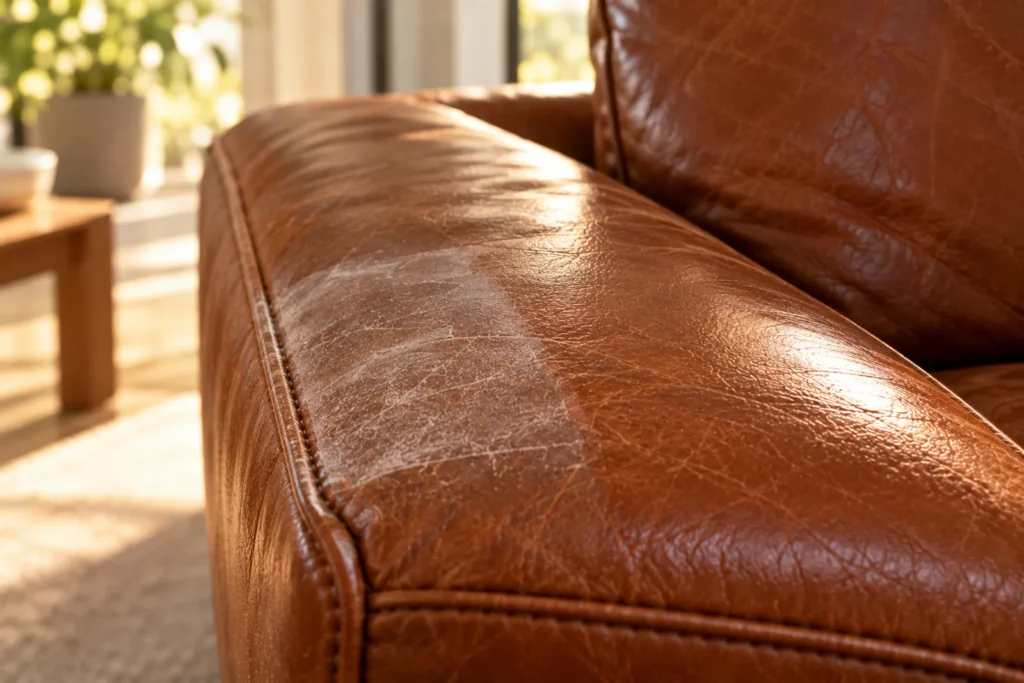
Baby wipes feel like the gentlest option in the house, which is why they are the most common habit we see.
- What is in them: mostly water, plus mild cleansing agents, moisturizers, preservatives and often fragrance. They are designed to leave a little lotion on skin.
- What happens on leather: the dirt comes off, and a thin film stays behind. Over weeks that film makes the surface look dull or slightly shiny in patches, feels tacky and collects more dirt. With long-term use, the finish on high-wear areas can soften and the color can start to lift.
- On aniline leather: the moisture soaks in and can leave a dark ring or a water mark.
Verdict: fine as a one-off for a fresh spill on finished leather — then wipe the area with a cloth dampened with plain water and dry it. Not for weekly cleaning.
Disinfecting and antibacterial wipes
These are a different product and much harsher. Most contain alcohol or other disinfectants that strip the protective coating and pull color. Light patches on armrests and car seats are very often the result of disinfecting wipes. Do not use them on leather at all.
Vinegar
White vinegar diluted with water is the classic internet recipe for cleaning leather.
- What it does well: it can help with salt marks and some odors.
- What it does badly: it is a weak cleaner for body oil and grease, which is most of the dirt on a sofa. It dries leather out, and on aniline leather it can leave a mark. Undiluted, it can dull the finish.
- The vinegar and olive oil mix: a popular recipe, and a bad one. The oil soaks in unevenly, darkens the leather, turns sticky and can go rancid.
Verdict: diluted vinegar on finished leather will not destroy a sofa in one use, but it does not clean well and it dries the leather. There is no good reason to make it your routine.
Dish soap, hand soap and saddle soap
- Dish soap. Great at cutting grease, which is exactly the problem: it also pulls the natural oils from the leather, and it is hard to remove completely without rinsing. A drop in a bowl of water for an emergency is acceptable on finished leather. A soapy bucket every month is not.
- Hand soap and bar soap. Milder, but they still leave residue and often contain fragrance and moisturizers that stay on the surface.
- Saddle soap. Made for saddles, tack and work boots — thick, tough leather. It is too heavy for upholstery, leaves a waxy residue and can darken furniture leather.
Verdict: a very small amount of mild soap in water works in a pinch on finished leather if you follow it with a cloth dampened with plain water. Keep it for emergencies.
Other products people ask about
- Melamine sponges (magic erasers). They are a very fine abrasive. They remove the stain by removing the finish, and the damage shows up later as a dull, pale patch.
- Rubbing alcohol. It dissolves leather finish and color. It has one narrow use — carefully dabbing a fresh ink mark on finished leather, as described in how to get ink off a leather couch — and it is not a cleaner.
- Window cleaner and all-purpose sprays. Too harsh; they strip the finish and dry the leather.
- Baking soda. Alkaline and slightly gritty. For absorbing fresh grease, cornstarch is gentler.
- Olive oil and coconut oil. Not cleaners and not conditioners for furniture: they darken the leather, attract dirt and can turn rancid.
- Hairspray and nail polish remover. Old ink-removal tips that take the color off along with the ink.
What is safe to use at home
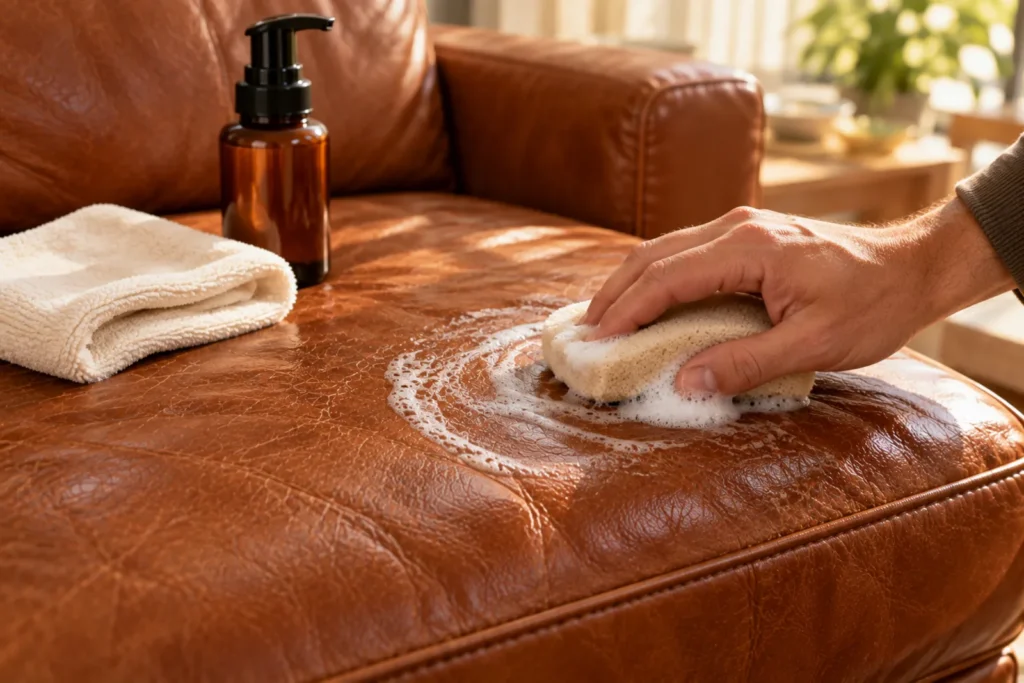
- A dry microfiber cloth and a vacuum with a soft brush for weekly dust and crumbs.
- A cloth lightly dampened with water — distilled if your tap water is hard — for fresh spills on finished leather. Blot, do not rub, and dry the spot afterwards.
- A leather cleaner made for upholstery for real cleaning every few months. Work it into a foam on a sponge rather than soaking the leather.
- A leather conditioner after cleaning, in a thin layer, to keep the leather supple.
Whatever you use, test it first on a hidden spot — under a cushion or on the back near the floor — and check it once it is dry. The full routine is in how to clean a leather couch.
If you have already been using wipes, vinegar or soap
Do not panic; on finished leather the usual result is residue, not ruin.
1. Stop using the product
Further layers only add to the build-up.
2. Remove the residue
Clean the affected areas with a leather cleaner worked into a foam on a soft sponge. Use light circular movements and wipe the foam away with a clean cloth as you go. A tacky armrest may need two or three gentle passes; let the leather dry in between.
3. Condition lightly
Once the surface is dry, apply a thin layer of conditioner and buff it after it has absorbed.
4. Look at it in daylight
If the color is even and the leather feels smooth and dry to the touch, you are done. Pale, dull or rough patches that stay after cleaning mean the finish itself is worn, and cleaning will not bring it back.
When to call a professional
- color has faded or lifted where wipes or sprays were used
- patches that stay sticky after several careful cleanings
- dark rings or water marks on aniline or semi-aniline leather
- a rough, dull area left by a melamine sponge
- cracking in the finish — see how to fix a cracked leather couch
A restorer can remove the build-up more deeply and recolor and reseal worn areas so they match the rest of the sofa.
For product-based routine care, see our leather couch cleaner page.
What we use in the workshop
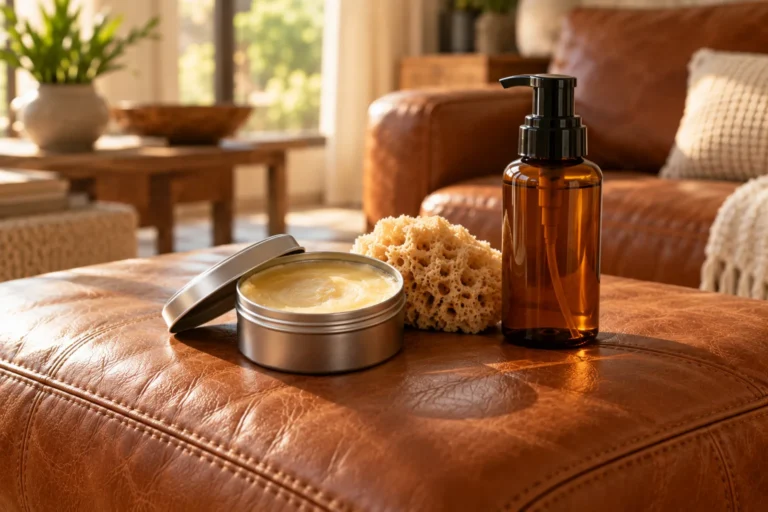
For everyday dirt, body oil and spills on finished leather we use a gentle foaming cleaner instead of wipes or kitchen products, and follow with a thin layer of conditioning balm. Our Leather Care Kit puts both in one box, with the sponge and cloths to apply them.
Frequently asked questions
Can you use baby wipes on a leather couch?
For a single fresh spill on finished leather, yes — then go over the spot with a cloth dampened with water and dry it. As a regular cleaner, no: baby wipes leave a film that dulls the finish and attracts dirt.
Can you use Clorox or Lysol wipes on leather?
No. Disinfecting wipes contain alcohol or other disinfectants that strip the protective finish and can pull color, especially with repeated use.
Is vinegar safe for leather couches?
Diluted vinegar will not destroy finished leather in one use, but it cleans grease poorly and dries the leather. It can leave marks on aniline leather. It is not a good routine cleaner.
Can I clean a leather couch with dish soap and water?
In an emergency, a drop of mild soap in a bowl of water is acceptable on finished leather, followed by a cloth dampened with plain water. Regular use dries leather and leaves residue.
What can I use to clean a leather couch if I do not have leather cleaner?
A dry microfiber cloth, a vacuum with a soft brush and a cloth lightly dampened with water handle dust and fresh spills on finished leather until you can clean it properly.
Related: How to Clean a Leather Couch Without Damaging It · Leather Cleaner vs Leather Conditioner · How to Remove Oil Stains From a Leather Couch